About the original paper
Sabine Kleissl-Muir, Caryn Zinn, Bodil Rasmussen, Alice Owen, and Andrea Driscoll (2022) published Low carbohydrate diet for diabetic cardiomyopathy: Protocol for a randomised controlled trial in the Journal of Metabolic Health (formerly the Journal of Insulin Resistance) on 14 October 2022. The paper is available in full at the publisher’s site under a Creative Commons Attribution 4.0 license. Kleissl-Muir, Rasmussen, and Driscoll were affiliated with the School of Nursing and Midwifery at Deakin University in Geelong, Victoria. Zinn contributed from the Auckland University of Technology, Owen from the Monash University School of Public Health, and Driscoll additionally from the Department of Cardiology at Austin Health in Heidelberg, Victoria.
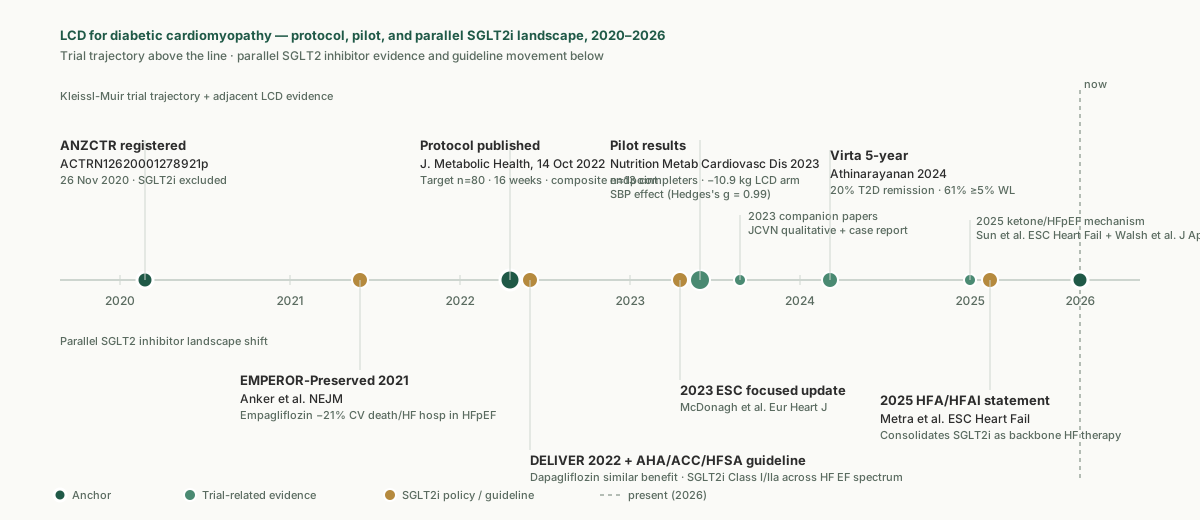
The paper is a protocol, not a results paper. Its purpose was to specify in advance the design of a planned trial and to publish that specification so that subsequent results could be interpreted against it. The trial was registered with the Australian New Zealand Clinical Trials Registry as ACTRN12620001278921p on 26 November 2020, and ethics approval was obtained from the Deakin University Human Research Ethics Committee (ND 69645/2020).
The proposed design was a 16-week single-centre parallel-arm open-label randomised controlled trial with a target enrollment of 80 adults over the age of 18 recruited from the heart failure outpatient clinic at a public teaching hospital in Victoria. Eligibility required a diagnosis of heart failure by echocardiography or by Boston criteria, plus either type 2 diabetes (HbA1c at or above 6.5%) or insulin resistance defined by a triglyceride-glucose (TyG) index at or above 4.49. Exclusion criteria removed patients with type 1 diabetes, insulin-treated type 2 diabetes, an estimated glomerular filtration rate below 50 mL/min/1.73m², cachexia, or ongoing SGLT2 inhibitor use.
The intervention arm received a whole-food low-carbohydrate diet delivering 50 to 130 grams of carbohydrate per day, protein at 1.2 to 1.7 g/kg ideal body weight, and unrestricted fat and total calories. Salt was not restricted. Adherence support was structured around a traffic-light food list and nine individual counselling sessions over the 16 weeks. The comparator arm received usual care, defined as the Heart Foundation of Australia “Living Well with Heart Failure” brochure and standard heart-healthy low-fat dietary guidance per Australian dietary guidelines.
The primary endpoint was a composite clinical measure incorporating New York Heart Association (NYHA) functional class, weight, hospital admissions, thirst distress on the Thirst Distress Scale for Heart Failure (TDS-HF), lower-limb swelling, and the Kansas City Cardiomyopathy Questionnaire (KCCQ-12) quality-of-life score. The secondary endpoint was a 2% change in HbA1c. Assessments were planned at baseline, week 6, and week 16.
One design feature is worth flagging directly. The protocol did not pre-specify cardiac imaging endpoints (global longitudinal strain by echocardiography, cardiac MRI) or cardiac biomarker endpoints (N-terminal pro-B-type natriuretic peptide, high-sensitivity troponin). Diabetic cardiomyopathy is defined mechanistically by structural and functional myocardial changes in the absence of coronary disease, valve disease, or hypertension sufficient to explain them. A trial that proposes to test dietary reversal of diabetic cardiomyopathy without imaging or biomarker endpoints is measuring symptomatic and quality-of-life effects rather than the underlying myocardial substrate. The authors acknowledged this scope choice implicitly by framing the primary endpoint as a composite of clinical and patient-reported measures, but the absence of imaging or biomarker endpoints limits what the trial could have shown about cardiomyopathy reversal even had it fully enrolled.
The protocol paper did not receive a specific research grant. Kleissl-Muir was supported by the Diabetes Victoria Trisha Dunning Research Scholarship. No commercial or industry funding was declared.
What has been validated since publication
The most important post-publication development is that the same author group actually executed the trial and published the results as a pilot study. Kleissl-Muir, Owen, Rasmussen, Zinn, and Driscoll (2023a) reported Effects of a low carbohydrate diet on heart failure symptoms and quality of life in patients with diabetic cardiomyopathy: A randomised controlled trial pilot study in Nutrition, Metabolism & Cardiovascular Diseases. The paper reframes the original trial as a pilot in the title, which is the honest framing given what happened during execution.
Recruitment fell substantially short of the planned 80 participants. Only 17 of the target 80 enrolled, and 13 completed the protocol (8 in the LCD arm and 5 in usual care). Two factors drove the under-recruitment. The COVID-19 pandemic disrupted outpatient clinic operations and study visits throughout the recruitment window. Second, the SGLT2 inhibitor exclusion criterion, reasonable at protocol design in 2020, became a rapidly accelerating barrier as guideline uptake of SGLT2 inhibitors for heart failure moved from investigational to standard-of-care during the recruitment period. The authors identified the SGLT2 inhibitor exclusion as a major barrier explicitly in the results paper.
The reported findings, with the small-sample caveats attached throughout, favored the LCD arm on several measures. The LCD group lost 10.9 kg over 16 weeks versus a 0.4 kg gain in usual care (p=0.004), which is a large absolute weight difference over a short intervention. The between-group effect on systolic blood pressure was large by conventional effect-size standards (Hedges’s g 0.99). Trends favored the LCD arm on fasting glucose (p=0.06), triglycerides, TyG index, and HbA1c, with none reaching statistical significance in a study of this size. Quality of life on the KCCQ-12 improved by a mean of 4.6 points in the LCD arm, which the authors described as clinically meaningful but which the study was underpowered to establish as statistically significant. No hospitalisations or deaths occurred in either arm.
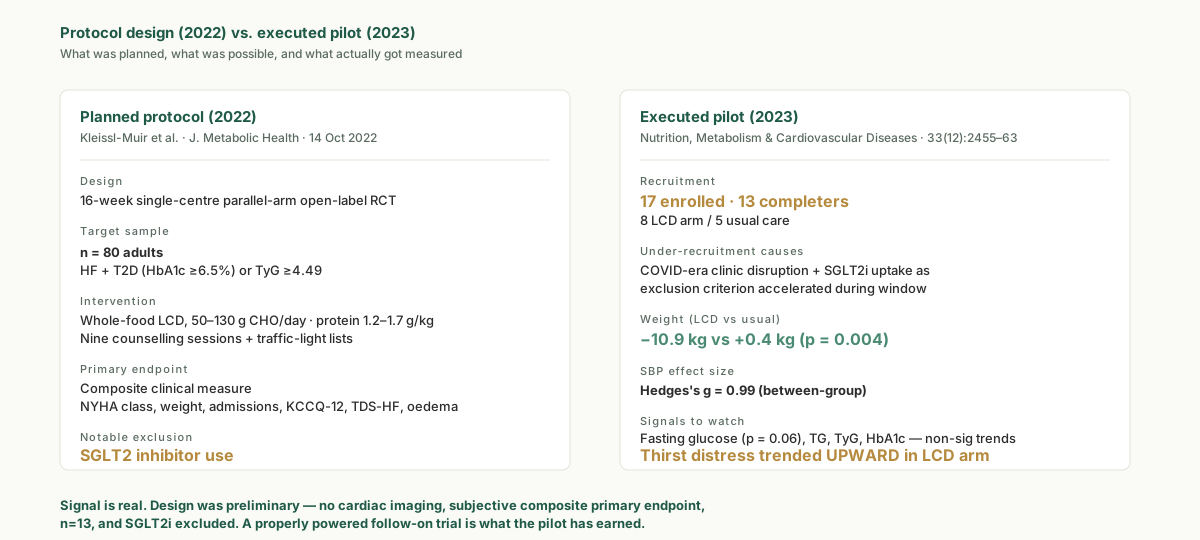
Thirst distress trended upward in the LCD arm rather than downward, which the authors attributed plausibly to natriuresis induced by ketogenic dietary patterns. This is a safety consideration in a heart failure population where fluid balance is often carefully managed and where thirst distress is itself a clinically relevant symptom. It is not a signal that the diet was unsafe in this small cohort, but it is a signal that fluid and sodium physiology deserve pre-specified attention in any follow-on trial.
The broader low-carbohydrate diet literature in type 2 diabetes has continued to develop in ways that support the general direction of the intervention. Athinarayanan and colleagues (2024) reported five-year extension data from the Virta continuous-care very-low-carbohydrate intervention in Diabetes Research and Clinical Practice: 20% of five-year completers achieved type 2 diabetes remission, 61% sustained at least 5% weight loss, triglycerides fell by 18%, and HDL cholesterol rose by 17%. The Virta cohort was not a heart failure population, and continuous-care protocols with high-touch coaching are different from a 16-week trial intervention, but the durability signal in the metabolic outcomes is a reasonable adjacency for the dietary rationale Kleissl-Muir applied to a heart failure population.
Mechanistic work on ketone metabolism in the failing heart has continued to accumulate. Von Bibra and colleagues (2014) reported that a three-week low-carbohydrate, higher-protein diet improved myocardial early diastolic tissue velocity (E’) by 0.9 cm/s versus no change on a low-fat comparator in 32 adults with type 2 diabetes and overweight or obesity. The finding is a decade older than the Kleissl-Muir protocol but predates it as a mechanistic anchor for the hypothesis that carbohydrate restriction produces measurable myocardial functional effects on a short timescale. More recent mechanistic work on ketone metabolism in heart failure with preserved ejection fraction (Sun et al., 2025) has documented alterations in myocardial ketone oxidation in HFpEF that provide a plausible pathway by which nutritional ketosis or exogenous ketone provision could affect cardiac substrate handling. A 2025 crossover study in the Journal of Applied Physiology reported that acute ingestion of a ketone monoester improved cardiac output in adults with type 2 diabetes.
The Kleissl-Muir group also published a qualitative companion paper in the Journal of Cardiovascular Nursing (Kleissl-Muir et al., 2023b) describing enablers and barriers to LCD adherence in the pilot cohort, and a single-patient case report in Endocrinology, Diabetes & Metabolism Case Reports (Kleissl-Muir et al., 2023c) describing a 45-year-old man with diabetic cardiomyopathy who over 12 months lost 39 kg, moved his HbA1c from 6.7% to 5.6%, moved his left ventricular ejection fraction from 45% to 51%, and moved his NYHA class from III to II on an LCD in place of SGLT2 inhibitor therapy. Neither the qualitative paper nor the case report supersedes the pilot’s statistical limitations, but both are consistent with a signal worth pursuing rigorously.
What has been criticized or remains contested
The most important post-publication issue is the mismatch between the 2022 protocol’s ambition and what the 2023 pilot could actually demonstrate. A study of 13 completers cannot support inference about clinical outcomes in heart failure. The pilot’s reframing is honest, and the authors call explicitly for a larger study with cardiac imaging and pre-specified fluid and sodium assessment. Readers evaluating the intervention in 2026 should read the 2023 pilot as hypothesis-generating rather than as evidence of clinical efficacy.
The open-label design is unavoidable for a dietary intervention but constrains interpretation. Patients randomised to a whole-food LCD with nine counselling sessions receive substantially more clinical attention than patients randomised to a brochure. The observed differences in weight, blood pressure, and self-reported quality of life reflect the intervention plus the intensity difference in support. This does not invalidate the findings, but it means that the pilot cannot separate diet-specific effects from attention effects.
The absence of cardiac imaging and NT-proBNP endpoints is a substantive limitation for a diabetic cardiomyopathy trial. The pilot cannot address whether the LCD produced measurable improvement in the myocardial substrate, only whether it produced measurable improvement in symptoms and weight. Any follow-on trial should incorporate global longitudinal strain by echocardiography at minimum, and ideally cardiac MRI in a subset, along with pre-specified NT-proBNP measurement at baseline and follow-up.
The therapeutic environment has moved substantially since the 2022 protocol was written. The SGLT2 inhibitor exclusion criterion, defensible in a 2020 design when SGLT2 inhibitors had not yet been established as backbone heart failure therapy, has become the study’s most significant recruitment barrier and its most significant translational limitation. EMPEROR-Preserved (Anker et al., 2021) demonstrated that empagliflozin reduced the composite of cardiovascular death or heart failure hospitalisation by 21% in heart failure with preserved ejection fraction. DELIVER (Solomon et al., 2022) demonstrated similar benefit for dapagliflozin. The 2022 AHA/ACC/HFSA heart failure guideline (Heidenreich et al., 2022) and the 2023 European Society of Cardiology focused update (McDonagh et al., 2023) placed SGLT2 inhibitors at Class I or Class IIa recommendation across the heart failure ejection-fraction spectrum. The 2025 HFA/HFAI scientific statement (Metra et al., 2025) consolidated the position. A trial that excludes patients on SGLT2 inhibitors in 2026 is excluding a substantial and growing majority of the heart failure with diabetes population.
The combined use of an LCD and an SGLT2 inhibitor carries a specific safety concern that constrains “diet-plus-drug” trial design. SGLT2 inhibitors are associated with an elevated risk of euglycemic diabetic ketoacidosis, and Mistry and Eschler (2021) documented cases in the AACE Clinical Case Reports series where patients on SGLT2 inhibitors developed euglycemic DKA in the context of low-carbohydrate or ketogenic dietary patterns. The mechanism is coherent: SGLT2 inhibition produces mild ketogenesis at baseline through reduced insulin secretion and increased glucagon, and carbohydrate restriction stacks on top of that ketogenic pressure. The absolute risk is low but the clinical consequences of DKA are severe, and the combination requires clinical monitoring that a pragmatic dietary trial is not designed to provide.
The thirst distress signal in the pilot deserves attention rather than dismissal. Heart failure patients are frequently counselled on fluid intake, and thirst distress is both a symptom of decompensation and a marker of quality of life. The pilot’s upward trend in thirst distress on the LCD arm, attributed by the authors to natriuresis, is plausible physiologically. It also suggests that any follow-on trial should pre-specify sodium intake tracking, weigh-in schedules, and clear protocols for adjusting diuretic dosing if intravascular volume shifts.
The pilot did not include a runway or bridging protocol for patients already on SGLT2 inhibitors, because the exclusion criterion removed them. A pragmatic follow-on trial in 2026 has to address this directly, either by enrolling patients on SGLT2 inhibitors and pre-specifying monitoring for euglycemic DKA, or by acknowledging that the trial is restricted to a narrow and clinically atypical subgroup. The former is more useful clinically but more complex operationally; the latter risks producing evidence that does not apply to the target population.
Broader nutrition guidance has moved in a direction that is compatible with the general dietary approach without endorsing it specifically for heart failure. The ADA 2026 Standards of Care name Mediterranean and lower-carbohydrate eating patterns as having the strongest evidence base for type 2 diabetes prevention, which represents a meaningful institutional shift since 2022. That said, ADA guidance on lower-carbohydrate patterns applies to type 2 diabetes management broadly, not to heart failure with diabetes, and it does not address the specific interactions between dietary carbohydrate restriction and heart failure pharmacotherapy.
What this means for readers in 2026
The 2022 protocol was ambitious and well-specified. The 2023 pilot showed a promising signal in a small and open-label cohort. The therapeutic environment has moved substantially. Practical implications differ meaningfully by reader.
If you have type 2 diabetes and heart failure and are currently taking an SGLT2 inhibitor, do not stop your medication in favor of a dietary intervention based on this trial. SGLT2 inhibitors are backbone therapy for heart failure with diabetes regardless of ejection fraction, with mortality and hospitalisation benefit demonstrated in adequately powered outcome trials. A small pilot of a dietary intervention that excluded patients like you is not a basis for changing medications. If you and your clinician want to add a lower-carbohydrate dietary approach on top of your medication, that conversation is worth having, but it needs to include explicit awareness of the euglycemic DKA risk that combines with SGLT2 inhibition and low-carbohydrate eating. Monitoring for symptoms of DKA (nausea, abdominal pain, fatigue, rapid breathing), and having a plan to check ketones if symptoms develop, is a reasonable precaution.
If you have type 2 diabetes without a heart failure diagnosis and are pursuing a lower-carbohydrate dietary approach for weight loss or glycemic control, the broader evidence base is meaningfully stronger than the Kleissl-Muir pilot alone. The Virta five-year extension data (Athinarayanan et al., 2024) documents durable weight loss, remission rates, and lipid changes in a continuous-care very-low-carbohydrate program. The ADA 2026 Standards of Care name lower-carbohydrate patterns as one of several evidence-supported eating patterns for type 2 diabetes management. The dietary approach is a reasonable component of a broader plan that includes appropriate pharmacotherapy, monitoring, and clinical follow-up. See our reviews of the Fung 2018 therapeutic fasting case series and Cucuzzella 2017 low-carbohydrate community survey for related evidence in adjacent populations.
If you are a clinician considering dietary intervention in diabetic cardiomyopathy, the pilot signal is real but underpowered. A 10.9 kg weight loss in the intervention arm at 16 weeks and a large effect on systolic blood pressure are not artifacts of chance in a study this small, but the composite subjective primary endpoint, absence of cardiac imaging, and open-label design leave the myocardial question unanswered. Dietary counselling with attention to carbohydrate quality is a reasonable component of a comprehensive plan for patients with diabetic cardiomyopathy. It should not displace SGLT2 inhibitor therapy, which has Class I or Class IIa guideline support with mortality and hospitalisation outcome data. Patients on combined LCD and SGLT2 inhibitor therapy warrant explicit counselling on euglycemic DKA risk and a plan for monitoring.
If you are evaluating dietary reversal claims for cardiomyopathy in popular contexts, including the Kleissl-Muir case report of one patient with substantial ejection fraction improvement, treat single cases as hypothesis-generating rather than as evidence of expected outcomes. Single-patient case reports are useful for identifying possibility and for describing mechanism, but they are not useful for estimating how often a similar approach will produce a similar result across a broader population. The population-level question requires an adequately powered trial with cardiac imaging endpoints, which is precisely what the Kleissl-Muir group has called for as follow-up.
If you are considering enrolment in a follow-on trial, the appropriate next study would incorporate pre-specified cardiac imaging (global longitudinal strain, ideally with cardiac MRI in a subset), NT-proBNP at baseline and follow-up, sodium and fluid balance tracking, formal counselling and monitoring around combined LCD and SGLT2 inhibitor use, and an enrolment strategy that does not exclude the majority of contemporary heart failure with diabetes patients. Such a trial would take the Kleissl-Muir pilot’s signal and either confirm it under conditions that match current standard of care or clarify that the signal reflects the intensity difference between structured dietary intervention and a brochure.
The 2022 protocol paper captured a specific moment in cardiometabolic research: the low-carbohydrate literature in type 2 diabetes had accumulated enough support to justify testing the approach in the highest-risk population, and SGLT2 inhibitors had demonstrated benefit in HFrEF but had not yet been established across the ejection-fraction spectrum. Two related things happened after the protocol was published. The pilot under-recruited, likely because of the increasing use of SGLT2 inhibitors, and the SGLT2 inhibitor evidence base expanded rapidly. The result is a piece of evidence that continues to matter as a well-designed protocol and an honestly reported pilot, sitting inside a therapeutic environment that has moved substantially. Readers in 2026 should engage with the work on those terms: a legitimate hypothesis, a small and preliminary test, and a clinical environment where dietary intervention sits alongside pharmacotherapy rather than in place of it.
References
Anker, S. D., Butler, J., Filippatos, G., et al. (2021). Empagliflozin in Heart Failure with a Preserved Ejection Fraction. The New England Journal of Medicine, 385(16), 1451–1461.
Athinarayanan, S. J., Roberts, C. G. P., Vangala, C., et al. (2024). Long-term effects of a novel continuous remote care intervention including nutritional ketosis for the management of type 2 diabetes: A 5-year follow-up. Diabetes Research and Clinical Practice, 218, 111917.
Heidenreich, P. A., Bozkurt, B., Aguilar, D., et al. (2022). 2022 AHA/ACC/HFSA Guideline for the Management of Heart Failure. Journal of the American College of Cardiology, 79(17), e263–e421.
Kleissl-Muir, S., Rasmussen, B., Owen, A., Zinn, C., & Driscoll, A. (2022a). Low carbohydrate diets for diabetic cardiomyopathy: A hypothesis. Frontiers in Nutrition, 9, 865489.
Kleissl-Muir, S., Zinn, C., Rasmussen, B., Owen, A., & Driscoll, A. (2022b). Low carbohydrate diet for diabetic cardiomyopathy: Protocol for a randomised controlled trial. Journal of Metabolic Health, 5(1), a73. https://doi.org/10.4102/jir.v5i1.73
Kleissl-Muir, S., Owen, A., Rasmussen, B., Zinn, C., & Driscoll, A. (2023a). Effects of a low carbohydrate diet on heart failure symptoms and quality of life in patients with diabetic cardiomyopathy: A randomised controlled trial pilot study. Nutrition, Metabolism & Cardiovascular Diseases, 33(12), 2455–2463.
Kleissl-Muir, S., Rasmussen, B., Owen, A., Zinn, C., & Driscoll, A. (2023b). Exploring the Barriers and Enablers to Implementing a 16-Week Low-Carbohydrate Diet for Patients with Diabetic Cardiomyopathy. Journal of Cardiovascular Nursing. PMID 37550835.
Kleissl-Muir, S., Rasmussen, B., Owen, A., Zinn, C., & Driscoll, A. (2023c). A low-carbohydrate diet in place of SGLT2 inhibitor therapy in a patient with diabetic cardiomyopathy. Endocrinology, Diabetes & Metabolism Case Reports, 2023, 23-0086.
McDonagh, T. A., Metra, M., Adamo, M., et al. (2023). 2023 Focused Update of the 2021 ESC Guidelines for the diagnosis and treatment of acute and chronic heart failure. European Heart Journal, 44(37), 3627–3639.
Metra, M., Tomasoni, D., Adamo, M., et al. (2025). SGLT2 inhibitors for the prevention and treatment of heart failure: A scientific statement of the Heart Failure Association and the Heart Failure Association of India. ESC Heart Failure.
Mistry, S., & Eschler, D. C. (2021). Euglycemic Diabetic Ketoacidosis Caused by SGLT2 Inhibitors and a Ketogenic Diet: A Case Series and Review of Literature. AACE Clinical Case Reports, 7(1), 17–19.
Solomon, S. D., McMurray, J. J. V., Claggett, B., et al. (2022). Dapagliflozin in Heart Failure with Mildly Reduced or Preserved Ejection Fraction. The New England Journal of Medicine, 387(12), 1089–1098.
Sun, W., Yang, Y., Chen, H., et al. (2025). Alterations of myocardial ketone metabolism in heart failure with preserved ejection fraction. ESC Heart Failure.
von Bibra, H., Wulf, G., St. John Sutton, M., Pfützner, A., Schuster, T., & Heilmeyer, P. (2014). Low-carbohydrate/high-protein diet improves diastolic cardiac function and the metabolic syndrome in overweight-obese patients with type 2 diabetes. IJC Metabolic & Endocrine, 2, 11–18.
Walsh, J. J., Caldwell, H. G., Neudorf, H., Ainslie, P. N., & Little, J. P. (2025). Acute ketone monoester ingestion improves cardiac output in adults with type 2 diabetes: A randomised crossover trial. Journal of Applied Physiology.