About the original paper
David Unwin, David Haslam, and Geoffrey Livesey (2016) published It is the glycaemic response to, not the carbohydrate content of food that matters in diabetes and obesity: The glycaemic index revisited in the Journal of Insulin Resistance. The paper is available in full at the publisher’s site under a Creative Commons Attribution 4.0 license. It runs nine pages and is classified as Original Research, drawing on three years of practice-wide outcome data combined with a literature review.
The setting was a 9,000-patient NHS primary care practice in the United Kingdom. David Unwin is the senior partner at Norwood Surgery in Southport, near Liverpool, where he has practiced family medicine since 1986. David Haslam was chair of the National Obesity Forum at Luton University Hospital. Geoffrey Livesey, affiliated with the Royal Society of Medicine, brought the nutrition science methodology to the collaboration.
The paper made three connected arguments. First, that glycemic index (the relative effect of a food on postprandial blood glucose) is more clinically meaningful than total carbohydrate count alone for managing T2D and obesity. Second, that both professionals and patients had misunderstood the index in ways that produced poor food choices, with starchy whole foods often consumed as if they were neutral when their glycemic effect was substantial. Third, that a practical translation tool (expressing GI data as “teaspoons of sugar equivalent” for common foods) could close the gap between the underlying science and what patients could actually do at the kitchen table.
The methods combined a literature review with practice-wide quality marker analysis over three years. Outcomes measured included HbA1c trajectories, weight changes, obesity prevalence, and diabetes drug expenditure compared with the local primary care area average. The teaspoons-of-sugar framing came out of clinical practice rather than from formal nutrition research.
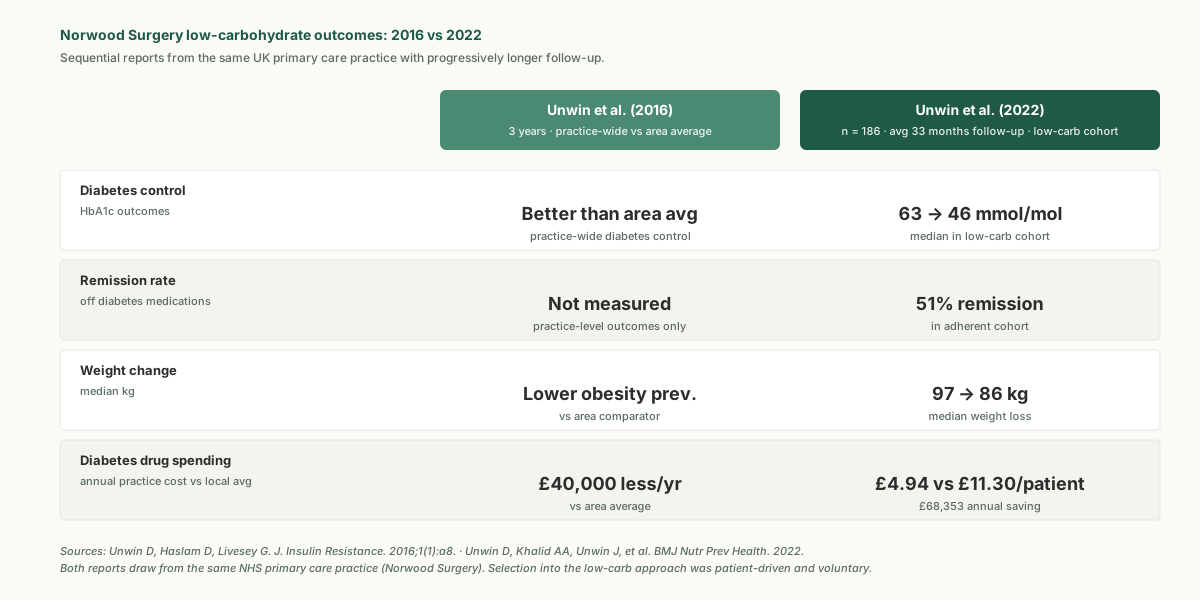
The reported outcomes were specific. The practice as a whole achieved significantly better diabetes control than the area average. Obesity prevalence was lower. Diabetes drug expenditure ran approximately £40,000 per year less than would be expected from the area average for a practice of that size. The authors framed these findings as supporting a primary care-led approach to T2D centered on patient understanding of glycemic response rather than abstract carbohydrate gram counting.
The paper did not declare external funding. The article has accumulated more than 123,000 abstract views and 89,000 full article views (among the most-read papers from the early Journal of Insulin Resistance issues) and has been cited in subsequent practical guides for adapting diabetes medication during dietary intervention (Murdoch, Unwin, Cavan, Cucuzzella, & Patel, 2019) and in narrative reviews of low-carbohydrate approaches in T2D care (Wheatley et al., 2021).
What has been validated since publication
The clinical claim that low glycemic index and low glycemic load diets benefit T2D outcomes has accumulated substantial supporting evidence between 2016 and 2026.
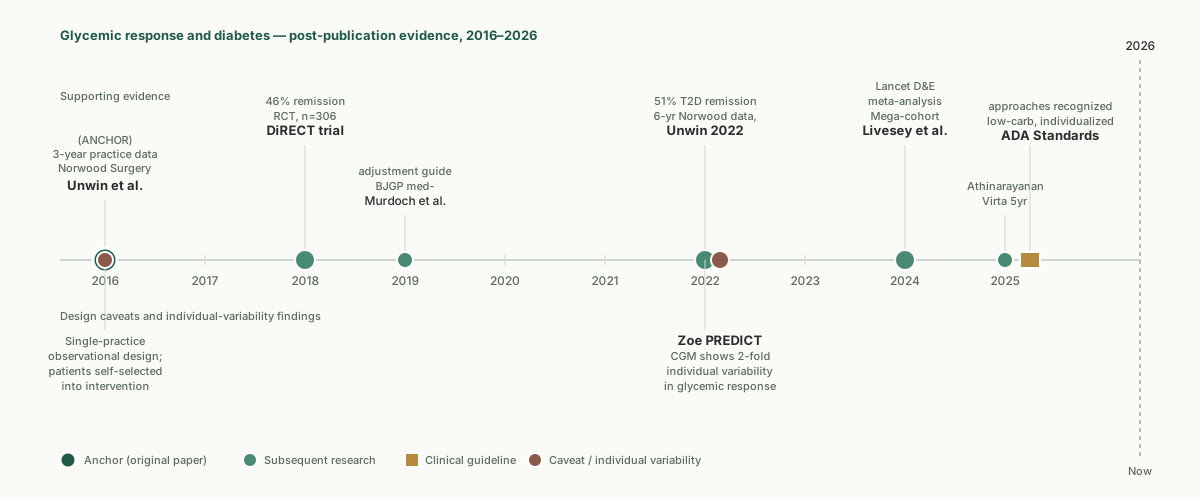
The strongest single piece of subsequent evidence is the 2024 meta-analysis published in The Lancet Diabetes & Endocrinology covering mega-cohorts of more than 100,000 participants total. The analysis examined associations between glycemic index, glycemic load, and major health outcomes including T2D incidence, cardiovascular disease, diabetes-related cancers, and all-cause mortality. Low GI and low GL diets were linked to reduced incidence of T2D, reduced cardiovascular mortality, reduced stroke mortality, and reduced breast cancer incidence. The effect sizes were similar to those associated with high-fiber or whole-grain consumption, suggesting that the relevant mechanism may be glycemic effect rather than carbohydrate type per se.
Unwin’s group has continued to publish longer-term outcome data from the Norwood Surgery practice. The 2022 paper in BMJ Nutrition, Prevention & Health reported on 186 T2D patients who chose a low-carbohydrate approach, with an average follow-up of 33 months. Overall T2D remission was achieved in 51% of cases. Median weight fell from 97 to 86 kg. Median HbA1c fell from 63 to 46 mmol/mol. Mean LDL cholesterol fell by 0.5 mmol/L. Mean triglycerides fell by 0.9 mmol/L. Mean systolic blood pressure fell by 12 mm Hg. The practice continued to spend substantially less on diabetes drugs than local comparators, at £4.94 per patient annually versus £11.30 in surrounding practices, an annual saving of £68,353 against the area average.
The DiRECT trial and the Virta Health continuous remote care studies provide complementary evidence from different intervention models. DiRECT (Lean et al., 2018; Thom et al., 2024) used a low-calorie formula diet rather than low GI per se, but the broader claim that dietary intervention can reverse T2D has been substantially validated. Athinarayanan and colleagues (2024) reported 5-year Virta Health outcomes showing sustained T2D remission through very-low-carbohydrate intervention with continuous remote care. The Unwin primary-care model, the DiRECT formula-diet model, and the Virta clinical-support model all converge on the broader claim that structured dietary intervention can produce sustained T2D remission in a meaningful fraction of patients.
A practical clinical guide developed by Murdoch, Unwin, Cavan, Cucuzzella, and Patel (2019), published in the British Journal of General Practice, addressed the medication-adjustment side of the equation. The guide gives prescribing physicians specific protocols for reducing insulin, sulfonylureas, SGLT-2 inhibitors, and antihypertensives as patients respond to carbohydrate restriction. This kind of practical clinical infrastructure was largely missing in 2016 and has accumulated substantially since.
Continuous glucose monitoring research has added an important nuance to the underlying glycemic-response argument. The Zoe PREDICT study (2022) used 14-day CGM data from 394 participants and found that individuals had approximately 2-fold variability in glycemic response to the same meals. Earlier work from Eran Segal’s group at the Weizmann Institute, published in Cell (2015), monitored continuous glucose in an 800-person cohort across 46,898 meals and reached similar conclusions. The PREDICT findings extend rather than contradict the Unwin argument. They support the underlying claim that glycemic response is what matters, while complicating any specific GI table by showing that individual responses vary enough that population-level GI values are imperfect predictors for any specific person.
The 2025 ADA Standards of Care (ElSayed et al., 2025) have incorporated low-carbohydrate eating patterns and individualized dietary approaches more explicitly than in earlier guidelines. The institutional position has moved closer to what Unwin and colleagues were arguing in 2016, though with appropriate medication-management caveats now built into the guidance.
What has been criticized or remains contested
The single-practice observational design of the 2016 paper carries the usual limitations. The Unwin practice patients were not randomized to the low-GI approach. Patients who engaged with the intervention may have differed systematically from those who did not, both in motivation and in baseline disease severity. The “practice-wide” comparison with area averages controls for some confounders but not for the self-selection effects within the practice. The 2022 follow-up paper in BMJ Nutrition, Prevention & Health improved the documentation but used the same broad design. Subsequent RCT-level evidence on dietary intervention for T2D comes from DiRECT and Virta rather than from Norwood Surgery directly.
The “GI vs total carbohydrate count” framing is more nuanced in 2026 than the 2016 paper presented. Glycemic index, glycemic load, and total carbohydrate intake are all relevant dimensions, and which one matters most depends on the specific patient, the specific meal context, and the specific clinical question. The Zoe PREDICT findings on 2-fold individual variability suggest that fixed GI tables, like the one the original paper relied on, are imperfect predictors for any specific person. Continuous glucose monitoring is moving the practical clinical question from “what does GI say about this food?” to “what does CGM say about how this patient responds to this food?” For some patients, total carbohydrate count remains the most clinically useful framing, particularly when insulin dosing is involved.
Real-world adherence outside structured primary care support remains the central practical question, same as for any dietary intervention. The Norwood Surgery outcomes reflect a specific support model: one-to-one GP consultations, group sessions, phone follow-up, peer reinforcement, and Dr. Unwin’s personal investment over years. The model is replicable in NHS primary care but requires deliberate structuring of clinical time and dietary education that not every practice will be set up to provide. The Murdoch et al. (2019) practical guide is a useful tool for practices that want to implement this approach.
The teaspoons-of-sugar framing has been criticized by some nutrition scientists as oversimplifying the underlying biochemistry. The framing treats the post-digestion glucose load as if it were dietary sugar, which is conceptually clean for patient communication but elides the differences between simple sugar (sucrose, fructose) absorption and complex carbohydrate digestion. As a clinical communication tool, the framing has been adopted widely in low-carb practice and is broadly considered useful even by those who object to the underlying simplification. The question is whether the trade-off between mechanistic precision and patient understanding is worth it. In clinical practice, the available evidence suggests yes.
The “low-carb” label covers a wide range of interventions, from modest reduction (less than 130g/day) to ketogenic (less than 20g/day). The Norwood approach was relatively moderate. Heavier carbohydrate restriction produces different metabolic effects and carries different safety considerations. The 2025 ADA Standards of Care guidance applies differently across this spectrum, and patients should not assume that what works at one level of carbohydrate restriction necessarily generalizes to deeper restriction.
What this means for readers in 2026
The 2016 paper’s clinical claim has been substantially validated. The implementation details have been refined by subsequent evidence.
If you have type 2 diabetes or prediabetes and are considering a low-glycemic-index or low-carbohydrate approach, the practical conclusion is supported by current evidence. The 2024 Lancet Diabetes & Endocrinology meta-analysis (covering more than 100,000 participants) found that low GI and low GL diets are associated with reduced T2D incidence and cardiovascular outcomes. Unwin’s own longer-term Norwood data (2022) and the broader DiRECT and Virta Health bodies of evidence all support that structured dietary intervention can produce sustained T2D improvement and sometimes remission. The most important practical caveat: if you take insulin, sulfonylureas, or SGLT-2 inhibitors, discuss medication adjustment with your prescribing physician before significantly reducing carbohydrates. Hypoglycemia risk is real but mitigable with proper adjustment.
If you are working in primary care or family practice, the Norwood model is a legitimate template. The Murdoch et al. (2019) practical guide in BJGP provides specific medication-adjustment protocols. The structured patient support model (one-to-one consultation, group education, periodic follow-up) is what made the outcomes possible, not the diet alone. Practices considering this approach should plan for the structured-support element rather than treating it as a leaflet-and-follow-up intervention.
If you have access to continuous glucose monitoring, the Zoe PREDICT findings (2022) and the broader CGM-in-non-diabetics literature suggest that your individual response to specific foods may differ from population averages by 2-fold or more. CGM data can refine which foods matter most for your specific glycemic response. The technology is increasingly accessible without prescription in many countries, including the US as of 2024–2025. The clinical utility for non-diabetic adults remains debated, but for T2D and prediabetic patients the value is clearer.
If you are evaluating “teaspoons of sugar equivalent” as a communication tool, the framing trades mechanistic precision for patient understanding and clinical traction. It works as patient education in primary care, where the goal is to help patients make better food choices, not to deliver a complete account of carbohydrate metabolism. If you encounter it in an educational context, treat it as a useful simplification rather than a complete biochemical model.
If you are considering whether to choose Mediterranean, low-carb, low-GI, or another dietary approach for your own metabolic health, the broader 2026 picture is that several dietary patterns produce benefit on metabolic syndrome markers, and the choice that works for you is the one you can sustain. The 2025 ADA Standards of Care acknowledge multiple valid dietary approaches. Glycemic response, total caloric intake, food quality, and sustainability all matter. The Unwin work made the case that glycemic response matters, and that case has held up. It does not establish that glycemic response is the only thing that matters or that low-GI is uniformly superior to other dietary patterns.
The 2016 paper was, in important ways, a record of what was working in one primary care practice. Eight years on, the evidence base has caught up. The clinical observation has been corroborated by larger studies, the implementation has been documented in practical guides, and the underlying glycemic-response argument has been refined by continuous glucose monitoring data. The teaspoons-of-sugar framing has entered the broader vocabulary of patient diabetes education. Of the early Journal of Insulin Resistance papers, this is the one that most cleanly transitioned from contested-at-time-of-publication to mainstream-clinical-practice eight years later.
References
Athinarayanan, S. J., Hallberg, S. J., McKenzie, A. L., et al. (2024). 5-Year effects of a novel continuous remote care model with carbohydrate-restricted nutrition therapy including nutritional ketosis in type 2 diabetes: An extension study. Diabetes Research and Clinical Practice. PMID: 39433217.
Berry, S. E., Valdes, A. M., Drew, D. A., et al. (2022). Validity of continuous glucose monitoring for categorizing glycemic responses to diet: implications for use in personalized nutrition. American Journal of Clinical Nutrition.
ElSayed, N. A., Aleppo, G., Bannuru, R. R., et al. (2025). Standards of Care in Diabetes—2025. Diabetes Care, 48(Suppl 1).
Lean, M. E. J., Leslie, W. S., Barnes, A. C., et al. (2018). Primary care-led weight management for remission of type 2 diabetes (DiRECT): an open-label, cluster-randomised trial. The Lancet, 391(10120), 541–551.
Livesey, G., Taylor, R., Livesey, H. F., et al. (2024). Association of glycaemic index and glycaemic load with type 2 diabetes, cardiovascular disease, cancer, and all-cause mortality: a meta-analysis of mega cohorts of more than 100 000 participants. The Lancet Diabetes & Endocrinology.
Murdoch, C., Unwin, D., Cavan, D., Cucuzzella, M., & Patel, M. (2019). Adapting diabetes medication for low carbohydrate management of type 2 diabetes: a practical guide. British Journal of General Practice, 69(684), 360–361.
Thom, G., Messow, C. M., Leslie, W. S., et al. (2024). 5-year follow-up of the randomised Diabetes Remission Clinical Trial (DiRECT) of continued support for weight loss maintenance in the UK: an extension study. The Lancet Diabetes & Endocrinology.
Unwin, D., Haslam, D., & Livesey, G. (2016). It is the glycaemic response to, not the carbohydrate content of food that matters in diabetes and obesity: The glycaemic index revisited. Journal of Insulin Resistance, 1(1), a8. https://doi.org/10.4102/jir.v1i1.8
Unwin, D., Khalid, A. A., Unwin, J., et al. (2022). Insights from a general practice service evaluation supporting a lower carbohydrate diet in patients with type 2 diabetes mellitus and prediabetes: a secondary analysis of routine clinic data including HbA1c, weight, and prescribing over 6 years. BMJ Nutrition, Prevention & Health.
Wheatley, S. D., Deakin, T. A., Arjomandkhah, N. C., Hollinrake, P. B., & Reeves, T. E. (2021). Low Carbohydrate Dietary Approaches for People With Type 2 Diabetes—A Narrative Review. Frontiers in Nutrition, 8.
Zeevi, D., Korem, T., Zmora, N., et al. (2015). Personalized Nutrition by Prediction of Glycemic Responses. Cell, 163(5), 1079–1094.