About the original paper
MaryJane Sampson, Daniel R. Lathen, Blake W. Dallon, Carrie Draney, Jason D. Ray, Kyle B. Kener, Brian A. Parker, Jonathan L. Gibbs, Jarom S. Gropp, Jeffery S. Tessem, and Benjamin T. Bikman (2017) published β-Hydroxybutyrate improves β-cell mitochondrial function and survival as Original Research in the Journal of Insulin Resistance. The paper is available in full at the publisher’s site under a Creative Commons Attribution 4.0 license. All eleven authors are affiliated with Brigham Young University, split between the Department of Physiology and Developmental Biology and the Department of Nutrition, Dietetics, and Food Science. The paper runs eight pages and represents collaborative work across the Bikman and Tessem laboratories.
The study began from a specific clinical observation. Pharmacological interventions for type 2 diabetes, including insulin therapy itself, have substantial side effects and do not address the underlying insulin resistance and β-cell dysfunction that produce the disease. Carbohydrate-restricted ketogenic diets have demonstrated efficacy in improving insulin resistance in T2D, and limited clinical evidence had suggested that ketogenic states may also improve β-cell function. The mechanism by which ketones might preserve β-cell health was largely unstudied. Sampson and colleagues set out to test specific effects of β-hydroxybutyrate (the predominant circulating ketone body) on pancreatic β-cell physiology and mitochondrial function in vitro.
The experimental approach used β-cell lines and isolated islets treated with βHB at concentrations relevant to nutritional ketosis. Measurements included β-cell survival, proliferation, mitochondrial mass, mitochondrial respiration, ATP production, and insulin secretion. The authors reported that βHB treatment increased β-cell survival and proliferation. Mitochondrial mass and respiratory function increased. ATP production increased. Insulin production and secretion, however, did not increase despite the mitochondrial improvements. The authors framed this as two distinct findings: that βHB has favorable effects on β-cell survival and mitochondrial biology, and that insulin secretion is not directly tied to apparent improvements in mitochondrial function or cellular proliferation.
The paper did not declare external funding. The author group is led by Benjamin T. Bikman, whose broader research program on insulin resistance and ketone biology has produced substantial peer-reviewed output and whose popular book Why We Get Sick (2020) has given him a public profile in the metabolic-health community. The Bikman lab’s peer-reviewed cellular and physiological work has been generally well-received in mainstream cell biology, even where his popular communication leans into stronger framings.
The article has accumulated more than 30,000 views and has been cited in subsequent peer-reviewed work, including a 2019 review on keto microbiota in Reviews in Endocrine and Metabolic Disorders (Cabrera-Mulero et al., 2019). The relatively modest citation count reflects the niche character of the specific β-cell mechanistic question, not the quality of the underlying work.
What has been validated since publication
The mechanistic finding that βHB has effects on β-cell biology beyond serving as alternative fuel has been substantially extended by subsequent research.
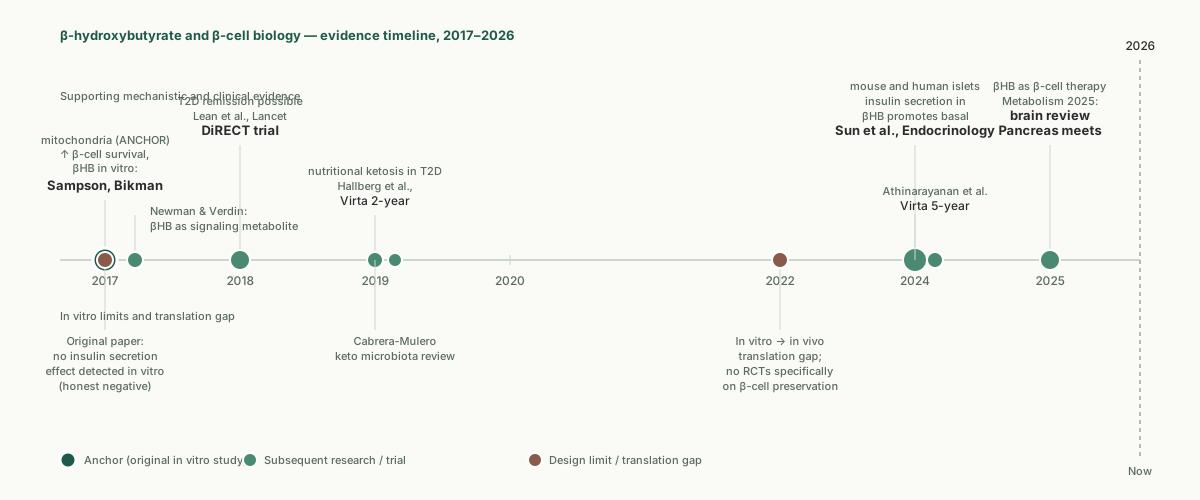
The strongest single subsequent finding is the 2024 paper published in Endocrinology by Oxford Academic, which reported that βHB promotes basal insulin secretion while decreasing glucagon secretion in both mouse and human islets. This finding refines the picture meaningfully. The original Sampson paper detected mitochondrial improvements without detecting insulin secretion changes. The 2024 work, with more sensitive techniques and human islet preparations, did detect insulin secretion effects. The two findings are not contradictory; the original in vitro work used immortalized β-cell lines and specific experimental conditions where insulin secretion responses may have been more difficult to measure. The 2024 paper suggests that the original study may have detected the mitochondrial signature of βHB effects without capturing the downstream insulin secretion consequences that subsequent research has documented.
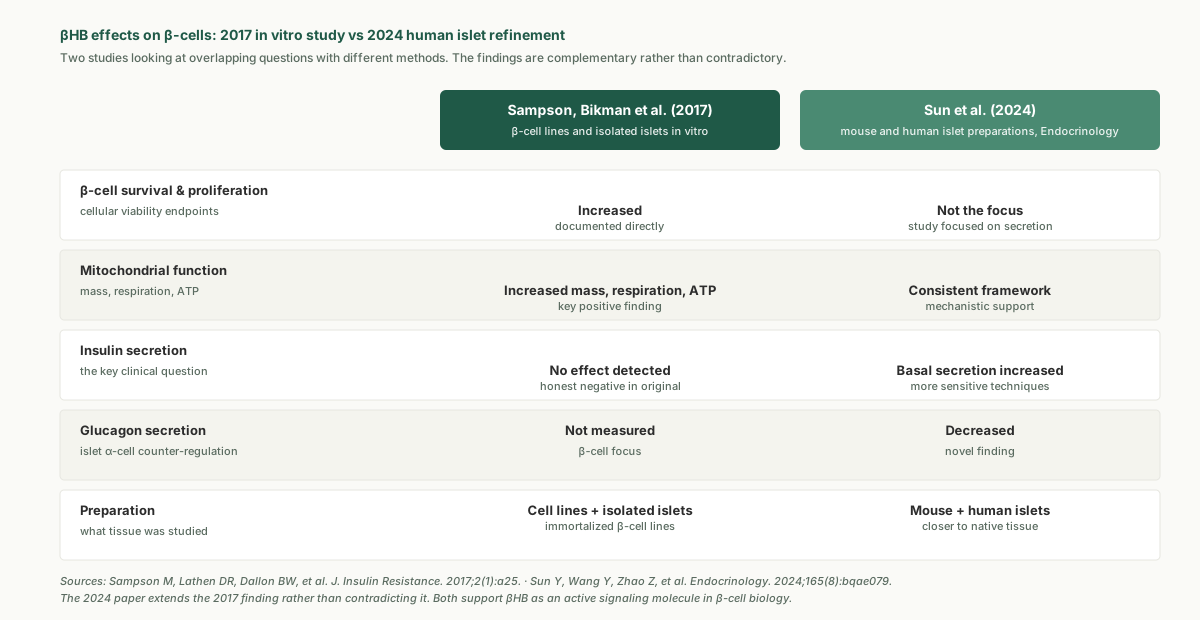
The broader recognition of βHB as a signaling molecule has expanded substantially. βHB is now well-established as a versatile signaling metabolite that integrates nutrient status with gene regulation, inflammation, oxidative stress, and cellular stress responses. βHB acts as an endogenous histone deacetylase inhibitor, modifying chromatin acetylation and thereby gene expression patterns. βHB activates G-protein-coupled receptor pathways including HCAR2. βHB modulates inflammasome activity, reducing pro-inflammatory signaling in multiple cell types. The cellular signaling framework that emerged after the Sampson paper provides mechanistic context for why βHB would have effects on β-cell biology beyond simple substrate utilization.
A 2025 review published in Metabolism titled Pancreas meets brain: β-hydroxybutyrate as a novel β-cellular metabolism therapy synthesizes the accumulated evidence on βHB’s effects on pancreatic biology and proposes therapeutic applications. The review’s existence reflects how the broader research community has caught up with the mechanistic question Sampson and colleagues opened in 2017.
The clinical translation of ketosis-and-β-cell-preservation has accumulated indirect evidence. Multiple clinical studies of dietary ketogenesis in T2D, including the Virta Health continuous remote care studies (Hallberg et al., 2019; Athinarayanan et al., 2024), have documented improvements in metrics that depend on preserved β-cell function. These clinical observations are consistent with the cellular mechanism the Sampson study identified, though clinical trials do not directly measure β-cell preservation in the way cellular studies can. The DiRECT trial (Lean et al., 2018; Thom et al., 2024) also documented improvements consistent with preserved or recovered β-cell function in T2D patients undergoing dietary intervention, though through a different intervention pathway (low-calorie formula rather than ketogenic).
What has been criticized or remains contested
The in vitro to in vivo translation question is the central limitation of the original work. β-cell lines (and to a lesser extent isolated islet preparations) are useful for mechanistic dissection but do not fully recapitulate the in vivo β-cell environment with its complex interactions with other islet cell types, paracrine signaling, vascular supply, and systemic metabolic context. Findings that βHB improves β-cell survival and mitochondrial function in vitro support the mechanistic hypothesis but cannot establish that the same effects occur in vivo in human patients consuming a ketogenic diet at physiological βHB concentrations.
The concentration question matters. Cell culture experiments often use βHB concentrations at or above the upper bound of human physiological ketosis to ensure detectable effects. The Sampson paper used concentrations relevant to nutritional ketosis, but in vitro exposure conditions are different from sustained in vivo exposure in tissue beds with specific microenvironments. Whether the mitochondrial and proliferative effects observed in vitro translate to comparable effects on β-cell mass and function in patients with established T2D remains an open question for clinical research.
The negative finding on insulin secretion in the original paper deserves attention. Sampson and colleagues did not detect increased insulin production or secretion despite the mitochondrial improvements. The 2024 Endocrinology paper found insulin secretion effects that the original work did not detect. The honest interpretation is that the original study may have been underpowered or used experimental conditions that masked the insulin secretion signal, not that subsequent work has overturned the original findings, but that the picture is more complex than the 2017 in vitro work alone could establish.
The single-paper, single-laboratory character of the original work is a structural limitation. The Sampson paper has been cited only once in Crossref-tracked subsequent literature (Cabrera-Mulero et al., 2019), reflecting both the niche character of the specific question and the limited extent to which the original work has been independently replicated. Independent replication of the specific β-cell mitochondrial findings with the specific cell preparations used in the Sampson study would strengthen the evidence base. Subsequent work has extended into related questions without specifically replicating the original experimental design.
Benjamin Bikman’s broader public profile is part of the context for evaluating the work, though less polemically than for some other authors in this catalog. Bikman’s popular book Why We Get Sick (2020) and his ongoing public communication advance a metabolic-health framing centered on hyperinsulinemia and insulin resistance as upstream drivers of chronic disease. His framing aligns with the Fung-Berger position covered in another review in this catalog. Bikman’s peer-reviewed cell biology work is generally well-regarded; his popular communication leans into stronger framings about the clinical implications of cellular mechanisms than the mechanistic work alone can support. The Sampson paper itself is appropriately measured: the authors report a negative finding (no insulin secretion increase) alongside the positive findings on mitochondrial biology, which is the kind of honest reporting that supports trust in the underlying science.
The clinical translation pipeline from “βHB has favorable effects on β-cells in vitro” to “ketogenic diet preserves β-cell function in T2D patients” is long. The intermediate steps include in vivo animal studies, isolated human islet studies, biomarker studies in humans on ketogenic diets, and ultimately clinical trials with β-cell function as a primary endpoint. The mechanistic case has been advancing. The direct clinical-outcome evidence on β-cell preservation specifically is thinner than the broader clinical evidence on ketogenic diet effects in T2D.
What this means for readers in 2026
The mechanistic finding has aged well. The clinical translation is still developing.
If you have type 2 diabetes and are considering a ketogenic or low-carbohydrate approach, the broader clinical evidence for dietary intervention in T2D (from DiRECT, the Virta Health continuous remote care studies, INTERFAST-2, and multiple meta-analyses) is much stronger than the specific cellular evidence on β-cell preservation. The Sampson paper and subsequent mechanistic work are consistent with the broader clinical observations, but the case for trying a ketogenic approach rests on the clinical outcome evidence, not specifically on the cellular mechanism. Discuss medication adjustment with your prescribing physician before significantly reducing carbohydrates, particularly if you take insulin, sulfonylureas, or SGLT-2 inhibitors. The relevant safety considerations are addressed in greater detail in our reviews of Fung 2017 and Cucuzzella 2017.
If you are evaluating mechanistic claims about ketones and metabolic health, the βHB-as-signaling-molecule framework is now well-established. βHB does more than provide alternative fuel during ketogenic states. It modifies gene expression through histone deacetylase inhibition, signals through GPCRs, and modulates inflammation through inflammasome effects. These mechanistic findings provide scientific context for why ketogenic diets produce effects beyond what simple substrate substitution would predict. The findings do not establish that any specific ketogenic intervention is superior to alternatives for any specific clinical purpose.
If you are encountering Bikman’s broader public commentary through Why We Get Sick, podcasts, or social media, the cellular mechanistic work his lab produces is generally well-regarded in mainstream cell biology. His popular communication advances stronger framings about clinical implications than the mechanistic evidence alone can support. Reading the specific peer-reviewed work on its own merits, while recognizing the gap between cellular findings and clinical recommendations, is the appropriate approach.
If you are a researcher or clinician evaluating the β-cell preservation question in T2D specifically, the available evidence supports mechanistic interest in βHB effects on β-cell biology, with the 2024 Endocrinology paper providing important refinement of the insulin secretion picture. Clinical-outcome studies specifically testing β-cell function preservation under sustained nutritional ketosis would meaningfully advance the evidence base. Existing clinical T2D ketogenic studies (Virta, DiRECT-comparable interventions) have not specifically focused on β-cell function as a primary endpoint, leaving the direct clinical translation as an open research question.
The 2017 Sampson study opened a specific mechanistic question about how ketones affect β-cell biology and reported a careful in vitro answer with honest negative findings alongside the positive findings. The broader research community has caught up to that question over the past eight years, with refined methods producing somewhat different results on insulin secretion specifically while supporting the broader claim that βHB has effects on β-cell biology beyond fuel utilization. The clinical translation pipeline remains incomplete, but the mechanistic foundation has held up.
References
Athinarayanan, S. J., Hallberg, S. J., McKenzie, A. L., et al. (2024). 5-Year effects of a novel continuous remote care model with carbohydrate-restricted nutrition therapy including nutritional ketosis in type 2 diabetes: An extension study. Diabetes Research and Clinical Practice. PMID: 39433217.
Cabrera-Mulero, A., Tinahones, A., Bandera, B., Moreno-Indias, I., Macías-González, M., & Tinahones, F. J. (2019). Keto microbiota: A powerful contributor to host disease recovery. Reviews in Endocrine and Metabolic Disorders, 20(4), 415–425.
Hallberg, S. J., McKenzie, A. L., Williams, P. T., et al. (2019). Long-Term Effects of a Novel Continuous Remote Care Intervention Including Nutritional Ketosis for the Management of Type 2 Diabetes: A 2-Year Non-randomized Clinical Trial. Frontiers in Endocrinology, 10.
Lean, M. E. J., Leslie, W. S., Barnes, A. C., et al. (2018). Primary care-led weight management for remission of type 2 diabetes (DiRECT): an open-label, cluster-randomised trial. The Lancet, 391(10120), 541–551.
Newman, J. C., & Verdin, E. (2017). β-Hydroxybutyrate: A Signaling Metabolite. Annual Review of Nutrition, 37, 51–76.
Pancreas meets brain authors. (2025). Pancreas meets brain: β-hydroxybutyrate as a novel β-cellular metabolism therapy. Metabolism.
Sampson, M., Lathen, D. R., Dallon, B. W., Draney, C., Ray, J. D., Kener, K. B., Parker, B. A., Gibbs, J. L., Gropp, J. S., Tessem, J. S., & Bikman, B. T. (2017). β-Hydroxybutyrate improves β-cell mitochondrial function and survival. Journal of Insulin Resistance, 2(1), a25. https://doi.org/10.4102/jir.v2i1.25
Sun, Y., Wang, Y., Zhao, Z., et al. (2024). Beta-Hydroxybutyrate Promotes Basal Insulin Secretion While Decreasing Glucagon Secretion in Mouse and Human Islets. Endocrinology, 165(8), bqae079.
Thom, G., Messow, C. M., Leslie, W. S., et al. (2024). 5-year follow-up of the randomised Diabetes Remission Clinical Trial (DiRECT) of continued support for weight loss maintenance in the UK: an extension study. The Lancet Diabetes & Endocrinology.