About the original paper
Cucuzzella, Tondt, Dockter, Saslow, and Wood (2017) published A low-carbohydrate survey: Evidence for sustainable metabolic syndrome reversal in the Journal of Insulin Resistance. The original paper is available in full at the publisher’s site at journalofmetabolichealth.org under a Creative Commons Attribution 4.0 license.
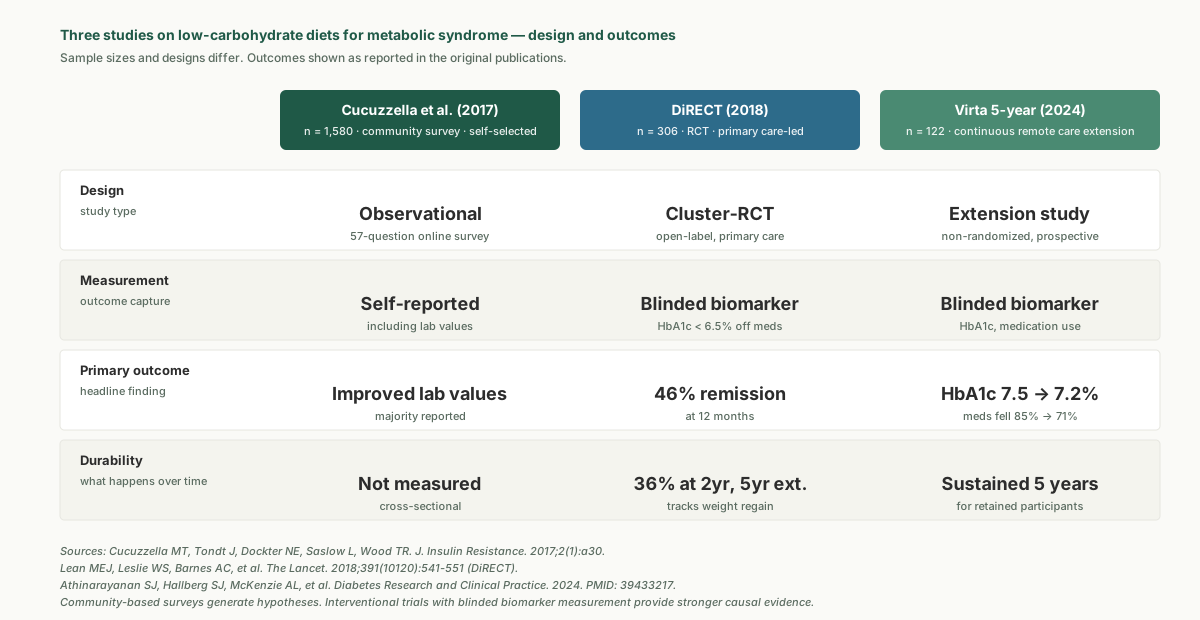
The study was a 57-question online survey distributed internationally through social media and low-carb communities. The methodology section is explicit about this recruitment approach. Respondents were people already practicing low-carbohydrate eating, reached through channels where they were likely to be successful adherents. The survey returned 1,580 responses.
The respondent profile was specific. Most participants had consumed less than 100 grams of carbohydrates per day for over a year. The typical motivation was weight loss or disease management. Respondents reported decreases in waist circumference and weight, reduced hunger, and increased energy. Among those who provided laboratory values, the majority reported improvements in HbA1c, blood glucose, and lipid panels. A quarter reported medication cost savings, with the subset who provided cost data reporting average monthly savings of $288. Pain reliever and anti-inflammatory usage dropped, with corresponding reductions in pain ratings and increases in mobility.
The authors concluded that low-carbohydrate diets are a sustainable method of metabolic syndrome reversal in a community setting. They were clear about the framing. The word “community” carries weight in the conclusion. The paper is not claiming to demonstrate causation through controlled experiment. It is documenting what self-selected community members reported about their experience.
The author group spans family medicine, medical education, health literacy, behavioral science, and pediatrics. The lead author, Mark Cucuzzella, is a family medicine physician at West Virginia University with a longstanding clinical and academic focus on lifestyle interventions for metabolic disease. The paper did not declare external funding.
The article has accumulated more than 53,000 views and has been cited in subsequent peer-reviewed work, including a 2018 implementation review (Westman et al., 2018), a 2022 qualitative analysis of T2D patients’ experience with low-carb diets (Newson et al., 2022), and a 2024 quasi-experimental study of nurse-led low-carb intervention in metabolic syndrome (Abdulghani & Al-Fayyadh, 2024).
What has been validated since publication
The core observation that low-carbohydrate diets produce meaningful improvements in metabolic syndrome and type 2 diabetes outcomes has been substantially validated by controlled clinical research in the years since publication.
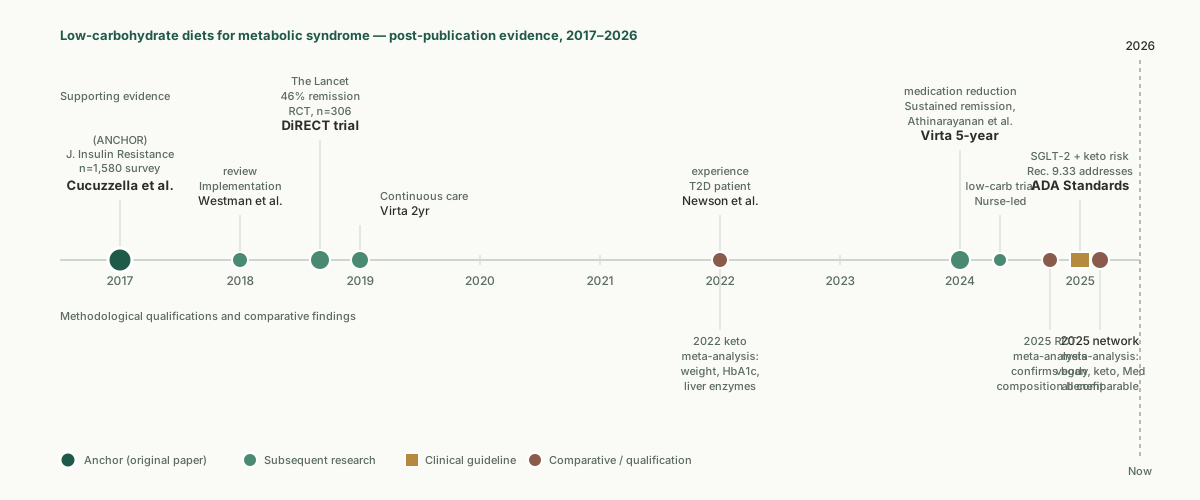
The most directly relevant validation comes from the Virta Health continuous remote care studies. Hallberg, Athinarayanan, and colleagues (2019) reported 2-year outcomes for a very-low-carbohydrate intervention with nutritional ketosis delivered through continuous remote care. Athinarayanan et al. (2024) extended these results to 5 years. Of 262 patients who started the trial, 169 consented to extension and 122 remained at year five. HbA1c improved from baseline (7.5%) to 7.2% at 5 years despite the percentage of patients prescribed diabetes medications falling from 85.2% to 71.3%. The retention rates and the durability of glycemic and weight outcomes are meaningful given how often dietary interventions show fade-out after the first year.
The DiRECT trial (Lean et al., 2018) provided complementary evidence through a different mechanism. DiRECT used a low-calorie formula diet rather than specifically low-carbohydrate eating, but its core finding mattered for the broader claim Cucuzzella et al. were making. At 12 months, 46% of intervention-arm participants achieved T2D remission. The 5-year follow-up (Thom et al., 2024) showed durable remission for a subset, with durability tracking weight loss. The DiRECT framework establishes that dietary intervention can reverse T2D in primary care settings, which is the broader umbrella under which low-carbohydrate approaches sit as one option.
Beyond the major trials, a 2024 quasi-experimental study (Abdulghani & Al-Fayyadh, 2024) tested a nurse-led low-carbohydrate regimen in patients with metabolic syndrome and found improvements in anthropometric and laboratory parameters. The intervention model echoes what Cucuzzella et al. were observing in community settings, but with structured clinical oversight.
Multiple meta-analyses have synthesized the broader literature. A 2022 systematic review covering 20 articles found significant effects of ketogenic interventions on weight, BMI, glucose, HbA1c, triglycerides, and liver enzymes, with no major adverse events. A 2025 systematic review and meta-analysis of 33 RCTs on ketogenic and low-carbohydrate diets in overweight or obese adults confirmed body composition benefits. A 2025 network meta-analysis published in Frontiers in Nutrition compared multiple dietary patterns and concluded that vegan, ketogenic, and Mediterranean diets each show meaningful potential for improving metabolic syndrome markers.
The 2025 ADA Standards of Care (ElSayed et al., 2025) added new content addressing low-carbohydrate and ketogenic eating patterns. Recommendation 9.33 provides specific guidance on mitigating ketoacidosis risk for individuals at risk who follow a ketogenic eating pattern, particularly those treated with SGLT-2 inhibitors. The recommendation does not endorse low-carbohydrate as the standard of care, but it does treat ketogenic diets as a clinical reality that requires professional guidance rather than dismissal.
What has been criticized or remains contested
Self-selected survey methodology limits causal inference. The Cucuzzella et al. (2017) sample was recruited through low-carb communities and social media. Respondents were people already adherent to the diet, often successfully, and often engaged enough with the broader low-carb community to encounter the survey. People who tried low-carbohydrate eating and failed, returned to a standard diet, or had adverse experiences would be substantially underrepresented. The authors acknowledged this. The paper’s contribution is hypothesis-generating, not causal demonstration.
Self-reported outcomes, including laboratory values, carry additional risk. Respondents who provided lab values were a subset, not randomized. The “majority improved” framing on HbA1c and glucose comes from this self-selected subset, not from a controlled measurement protocol. Subsequent RCTs (Virta Health, DiRECT, nurse-led intervention studies) addressed this by using independent biomarker measurement.
Exercise co-variance is a specific confounder worth naming. The Cucuzzella et al. respondents were self-selected community members motivated enough to adopt and sustain low-carbohydrate eating for over a year. The same motivation profile that produces sustained dietary change is associated with higher physical activity levels; people who commit to structured dietary change often commit to structured exercise, and vice versa. The original survey did not capture participants’ physical activity levels systematically. Low-carbohydrate and ketogenic dietary approaches have been particularly popular in athletic communities, where dietary and exercise interventions co-occur by design. Exercise itself improves the specific outcomes the survey measured: weight, HbA1c, fasting glucose, blood pressure, and lipid profiles. Studies designed to isolate dietary effects from exercise effects have consistently found smaller diet-specific effects than observational studies that do not distinguish between the two exposures. The 2025 network meta-analysis referenced above found comparable effects across dietary patterns on metabolic syndrome markers, which is consistent with the interpretation that a meaningful portion of observed benefit in dietary-community cohorts reflects the co-occurring lifestyle changes (increased physical activity, improved sleep, reduced alcohol intake) rather than dietary composition specifically. Interventional trials that hold exercise constant while varying only diet composition are the appropriate design to isolate dietary effects; the Cucuzzella community-based survey design cannot make this distinction.
Definition heterogeneity complicates interpretation across studies. “Low-carbohydrate” is not a single intervention. The Cucuzzella survey used a 100-gram-per-day cutoff. Other studies use 50 grams (very-low-carb), 20 grams (ketogenic), or higher thresholds. Mediterranean-style low-carb, animal-based ketogenic, and carnivore approaches differ in composition and likely in effect. The aggregate effect estimates from meta-analyses obscure these differences.
Other dietary approaches achieve comparable results on key metabolic endpoints. The 2025 network meta-analysis comparing dietary patterns found that vegan, ketogenic, and Mediterranean diets all showed substantial potential for improving metabolic syndrome markers. Studies comparing low-carbohydrate directly with Mediterranean or with continuous calorie restriction often find comparable HbA1c reductions, with the mechanism appearing to be more about energy balance and adherence than something unique to carbohydrate restriction. Patients who find Mediterranean eating more sustainable may achieve similar metabolic benefits without a specific low-carb prescription.
Long-term adherence outside structured support remains the central practical question. The Virta Health 5-year data are encouraging precisely because they include the support model: continuous remote care, biomarker tracking, and clinical oversight. The Cucuzzella et al. respondents were embedded in low-carb communities, which provided informal peer support, accountability, and information. Outside of structured clinical programs or strong peer communities, sustained adherence to any restrictive dietary pattern is meaningfully lower. Most self-directed low-carb attempts show significant dropout over the first year.
Specific safety considerations exist for certain patient populations. The 2025 ADA Standards (ElSayed et al., 2025) explicitly warn against ketogenic eating patterns for patients treated with SGLT-2 inhibitors due to elevated risk of euglycemic diabetic ketoacidosis. Patients on insulin or sulfonylureas require medication adjustment before initiating significant carbohydrate restriction, the same hypoglycemia-risk pattern that applies to therapeutic fasting. Patients with eating disorder histories, patients who are pregnant or breastfeeding, and patients with kidney disease may have additional contraindications. None of these were within scope of the original survey but are central to clinical implementation.
What this means for readers in 2026
The central observation has been validated and extended. The clinical evidence in 2026 is substantially stronger than what was available when Cucuzzella et al. published in 2017.
If you have type 2 diabetes or metabolic syndrome and are considering a low-carbohydrate diet, the evidence supports that this can work and is sustainable for many patients. The Virta Health 5-year outcomes (Athinarayanan et al., 2024) are the strongest evidence available for the model that pairs dietary change with continuous clinical support. The DiRECT framework (Lean et al., 2018; Thom et al., 2024) is the strongest evidence for any structured dietary intervention. The 2025 ADA Standards (ElSayed et al., 2025) now treat low-carbohydrate as a clinical option requiring professional guidance. The most important practical points: discuss medication adjustment with your prescribing physician before significantly restricting carbohydrates, particularly if you take insulin, sulfonylureas, or SGLT-2 inhibitors. Continuous glucose monitoring is increasingly accessible and useful during the transition.
If you have not been diagnosed with metabolic disease but want to improve metabolic health, low-carbohydrate eating is one of several evidence-based approaches. Mediterranean, DASH, vegan, and continuous moderate calorie restriction also show meaningful benefit on metabolic syndrome markers. The 2025 network meta-analysis suggests vegan, ketogenic, and Mediterranean patterns produce the strongest effects across multiple metabolic indicators. Sustainability matters more than the specific dietary label. The best evidence-based diet is the one you can actually maintain over years.
If you are considering a self-directed approach without clinical support, the realistic adherence picture is humbling. Most self-directed dietary interventions show meaningful dropout in the first year. The Cucuzzella et al. respondents were embedded in peer communities, which provided informal support. The Virta Health success was tied to a clinical support model. If you are attempting low-carbohydrate eating without either, building in some form of accountability (a peer group, a coach, a clinician check-in schedule) is the single intervention most likely to improve your odds.
If you have specific risk factors including taking insulin or sulfonylureas, taking SGLT-2 inhibitors, having a history of eating disorders, being pregnant or breastfeeding, or having significant kidney disease, low-carbohydrate eating may not be appropriate for you or may require specific medical supervision. Talk to your physician before making significant dietary changes.
The Cucuzzella et al. paper sat at a moment when low-carbohydrate eating was treated as fringe by most mainstream medical bodies. Eight years later, the picture is different. Clinical evidence has accumulated. The ADA Standards have adapted. Specialized clinical programs operate at scale with documented outcomes. The 2017 survey was hypothesis-generating, and the hypothesis it generated has held up well, with the appropriate caveats about who the evidence applies to and what kind of support patients need to succeed.
References
Abdulghani, M. F., & Al-Fayyadh, S. (2024). The effect of a nurse-led low carbohydrate regimen on anthropometric and laboratory parameters of patients with metabolic syndrome: a quasi-experimental study. Frontiers in Public Health, 12.
Athinarayanan, S. J., Hallberg, S. J., McKenzie, A. L., et al. (2024). 5-Year effects of a novel continuous remote care model with carbohydrate-restricted nutrition therapy including nutritional ketosis in type 2 diabetes: An extension study. Diabetes Research and Clinical Practice. PMID: 39433217.
Cucuzzella, M. T., Tondt, J., Dockter, N. E., Saslow, L., & Wood, T. R. (2017). A low-carbohydrate survey: Evidence for sustainable metabolic syndrome reversal. Journal of Insulin Resistance, 2(1), a30. https://doi.org/10.4102/jir.v2i1.30
ElSayed, N. A., Aleppo, G., Bannuru, R. R., et al. (2025). Standards of Care in Diabetes—2025. Diabetes Care, 48(Suppl 1).
Hallberg, S. J., McKenzie, A. L., Williams, P. T., et al. (2019). Long-Term Effects of a Novel Continuous Remote Care Intervention Including Nutritional Ketosis for the Management of Type 2 Diabetes: A 2-Year Non-randomized Clinical Trial. Frontiers in Endocrinology, 10.
Lean, M. E. J., Leslie, W. S., Barnes, A. C., et al. (2018). Primary care-led weight management for remission of type 2 diabetes (DiRECT): an open-label, cluster-randomised trial. The Lancet, 391(10120), 541–551.
Newson, L., Parody, F. H., & Lee, L. K. (2022). Investigating the experiences of low-carbohydrate diets for people living with Type 2 Diabetes: A thematic analysis. PLOS ONE, 17(8), e0273422.
Thom, G., Messow, C. M., Leslie, W. S., et al. (2024). 5-year follow-up of the randomised Diabetes Remission Clinical Trial (DiRECT) of continued support for weight loss maintenance in the UK: an extension study. The Lancet Diabetes & Endocrinology.
Westman, E. C., Tondt, J., Maguire, E., & Yancy, W. S. (2018). Implementing a low-carbohydrate, ketogenic diet to manage type 2 diabetes mellitus. Expert Review of Endocrinology & Metabolism, 13(5), 263–272.