About the original editorial
Jason Fung and Amy Berger (2016) published Hyperinsulinemia and Insulin Resistance: Scope of the Problem as the inaugural editorial in the first volume of the Journal of Insulin Resistance. The piece is available in full at the publisher’s site at journalofmetabolichealth.org under a Creative Commons Attribution 4.0 license. It runs six pages and includes no formal abstract, as is conventional for editorials introducing a new journal.
The editorial laid out the conceptual frame for the journal. The argument has two parts. First, that hyperinsulinemia — chronic elevation of insulin — precedes and drives the development of insulin resistance, rather than being a compensation for pre-existing insulin resistance. Second, that the cluster of conditions grouped under metabolic syndrome (obesity, type 2 diabetes, hypertension, dyslipidemia, non-alcoholic fatty liver disease, and others) shares this upstream driver, and that effective treatment requires reducing insulin exposure rather than escalating insulin therapy.
The treatment implications follow directly. If hyperinsulinemia is causal, then dietary interventions that lower insulin secretion (carbohydrate restriction, time-restricted eating, fasting) and pharmacological approaches that reduce insulin demand (metformin, GLP-1 receptor agonists, SGLT-2 inhibitors) should be preferred over interventions that supplement insulin. The conventional treatment cascade — oral agents leading to insulin therapy as beta-cell function declines — becomes counterproductive under this framing because it intensifies the upstream driver of the disease.
Jason Fung is a Toronto nephrologist who became well known through popular books advocating fasting for metabolic disease, including The Obesity Code and The Diabetes Code. Amy Berger holds an MS in human nutrition and is affiliated with the Nutrition Institute at the University of Bridgeport. Neither author declared external funding for the editorial. Both authors have substantial public profiles in the broader low-carbohydrate and metabolic health community.
The article has accumulated more than 85,000 views, the highest single-article view count among the early Journal of Insulin Resistance papers, and has been cited in subsequent peer-reviewed work on adipocyte biology (Li et al., 2021), insulin resistance criteria in children and adolescents (Lee et al., 2020), and metabolic regenerative medicine.
What has been validated since publication
The conceptual framing has accumulated substantial supporting evidence between 2016 and 2026, though the strongest support is for the clinical implications rather than for the specific upstream-causation claim.
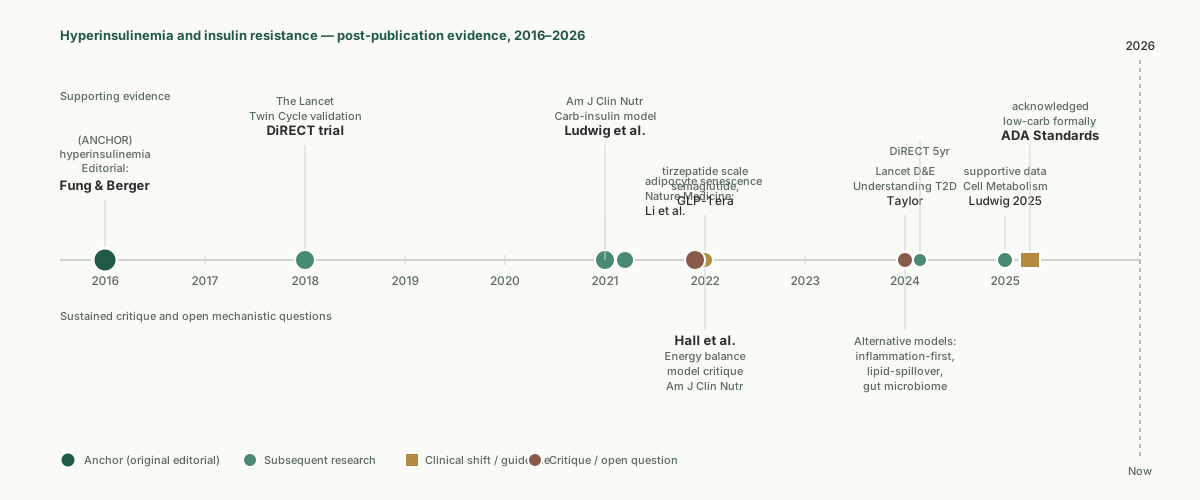
The carbohydrate-insulin model of obesity, developed primarily by David Ludwig and Cara Ebbeling at Harvard, formalized parts of the Fung-Berger argument in mainstream metabolic research. Ludwig and colleagues (2021) published The carbohydrate-insulin model: a physiological perspective on the obesity pandemic in the American Journal of Clinical Nutrition, arguing that high-glycemic-load diets drive insulin secretion, sequester fuel in adipose tissue, and produce the metabolic adaptations that lead to obesity and downstream metabolic disease. Ludwig et al. (2025) followed up with Testing the carbohydrate-insulin model: The data are supportive! in Cell Metabolism, presenting feeding-study and genetic evidence consistent with the model. The carbohydrate-insulin model is not identical to the Fung-Berger framing (it focuses on obesity pathogenesis rather than the full metabolic syndrome), but the mechanistic core is the same.
The Twin Cycle Hypothesis of T2D pathogenesis, developed by Roy Taylor at Newcastle, provides complementary mechanistic support. Taylor (2024) published Understanding the cause of type 2 diabetes in The Lancet Diabetes & Endocrinology, summarizing two decades of work showing that excess fat accumulation in the liver and pancreas drives a self-reinforcing cycle that produces hyperglycemia and beta-cell dysfunction. The DiRECT trial (Lean et al., 2018), built on the Twin Cycle Hypothesis, demonstrated that substantial weight loss can reverse T2D in 46% of intervention-arm participants at 12 months, with durable remission for a subset at the 5-year follow-up (Thom et al., 2024). The Twin Cycle Hypothesis is not antagonistic to the Fung-Berger framing. It locates the proximate mechanism in ectopic fat accumulation rather than in hyperinsulinemia per se, but the treatment implication (dietary intervention to reverse the disease process) matches.
Mechanistic research on the direct effects of hyperinsulinemia has continued. Li and colleagues (2021), publishing in Nature Medicine, documented that obesity and hyperinsulinemia drive adipocytes to activate a cell cycle program and senesce, providing molecular evidence for hyperinsulinemia as a causal agent in adipose tissue dysfunction. This is the kind of mechanistic validation the editorial’s framing required.
The clinical implications have been validated more thoroughly than the upstream mechanism. The Virta Health continuous remote care studies (Hallberg et al., 2019; Athinarayanan et al., 2024) showed that very-low-carbohydrate intervention can produce sustained T2D remission with medication reduction over 5 years. The DiRECT trial showed the same outcome through a different dietary mechanism (Lean et al., 2018; Thom et al., 2024). The 2025 ADA Standards of Care (ElSayed et al., 2025) explicitly acknowledge low-carbohydrate eating patterns as a clinical option requiring professional guidance, a meaningful institutional shift from the 2016 environment in which low-carb was treated as fringe by most diabetes professional bodies.
The GLP-1 receptor agonist era has added a third line of support for the broader framing. Semaglutide, tirzepatide, and related agents reduce body weight, improve glycemic control, and produce metabolic improvements through mechanisms that include reducing insulin secretion and improving insulin sensitivity. These agents have changed the clinical landscape of T2D and obesity treatment in ways that align with the editorial’s argument that targeting insulin exposure produces better outcomes than supplementing insulin.
What has been criticized or remains contested
The mechanistic core of the editorial, that hyperinsulinemia causes insulin resistance rather than being caused by it, remains genuinely contested in the broader endocrinology literature.
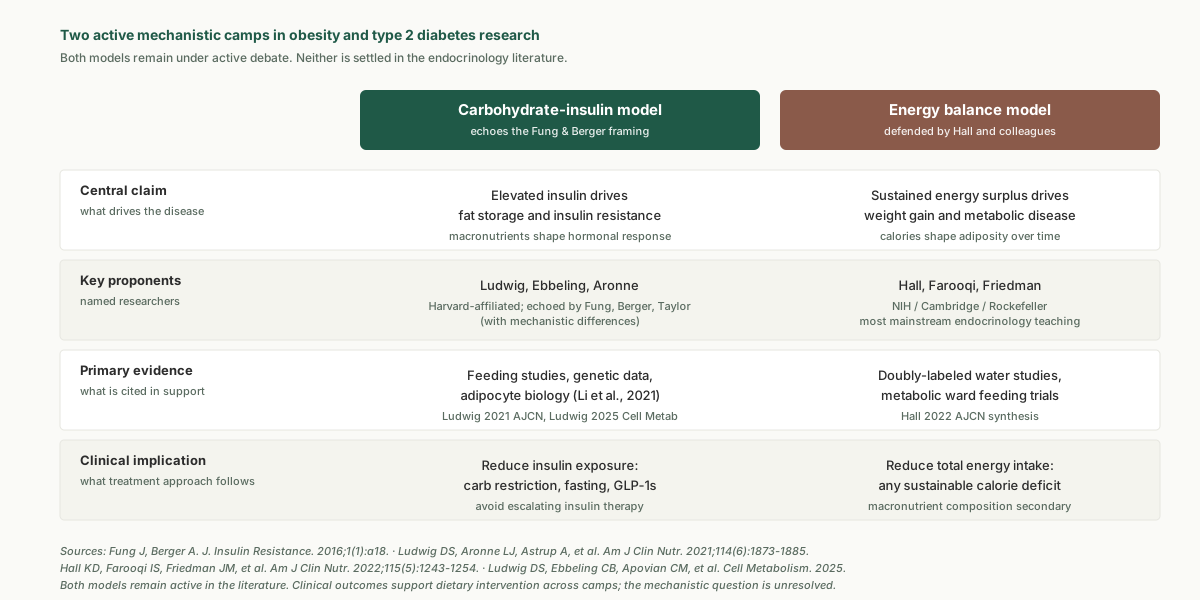
Kevin Hall and colleagues at NIH have mounted the most sustained critique of the carbohydrate-insulin model, which is the closest mainstream formalization of the Fung-Berger argument. Hall et al. (2022) published The energy balance model of obesity: beyond calories in, calories out in the American Journal of Clinical Nutrition, presenting the case that energy balance, not macronutrient composition, is the central driver of weight gain and metabolic disease. Hall’s critique has multiple dimensions. He argues that Ludwig and Ebbeling have misrepresented the energy balance model as a simplistic “calories in, calories out” framework when modern energy balance models incorporate hormonal, environmental, and behavioral factors. He has identified specific methodological issues in feeding studies cited as supportive of the carbohydrate-insulin model, including isotope sequestration that may bias doubly-labeled water energy expenditure measurements and post-hoc participant exclusions that may inflate apparent metabolic advantages of low-carb diets. The Hall-Ludwig exchange has been an active scientific discourse for nearly a decade and shows no sign of resolution.
The conventional clinical model of T2D pathogenesis, that insulin resistance develops first and hyperinsulinemia follows as a compensatory response, remains the dominant teaching in most endocrinology training and the framework underlying most diabetes treatment guidelines. The Fung-Berger framing inverts this causation. The empirical question of which direction causation runs at the molecular level is not fully resolved. Some research supports primary hyperinsulinemia in specific contexts (Li et al., 2021); other research is consistent with insulin resistance as the upstream event. The two models may both be correct in different patient populations or at different disease stages.
The treatment implications are more contested than the conceptual framing suggests. Even researchers who accept that hyperinsulinemia plays a meaningful causal role often disagree that carbohydrate restriction is the necessary or optimal intervention. The DiRECT trial achieved T2D remission with a low-calorie formula diet that was not specifically low-carbohydrate (Lean et al., 2018). GLP-1 receptor agonists achieve dramatic weight loss and metabolic improvement without dietary restriction. Bariatric surgery produces T2D remission through mechanisms that are not primarily dietary. The clinical evidence supports the broader claim that reversible metabolic disease responds to interventions that reduce total metabolic stress, but the specific prescription of carbohydrate restriction is one option among several with comparable outcomes in head-to-head comparisons.
Jason Fung’s broader public profile, particularly his popular books and his framing of pharmaceutical management of T2D as actively harmful, has generated significant pushback from mainstream endocrinology. The clinical observations that fasting and low-carbohydrate eating can reverse T2D in many patients are well-supported. The broader rhetorical framing, that conventional T2D management is iatrogenic, remains more contested. The line between the empirical claim and the rhetorical framing matters for evaluating where the original editorial’s argument lands today.
Inflammation-first models of metabolic disease, lipid-spillover models, and the gut microbiome literature offer alternative or complementary causal frameworks for metabolic syndrome that do not center hyperinsulinemia as the primary driver. The 2025 metabolic research environment has multiple active models, and the field has not consolidated around a single causal account.
What this means for readers in 2026
If you have type 2 diabetes or metabolic syndrome, the practical conclusion of the editorial (that dietary intervention can substantially improve and sometimes reverse the disease) has been validated by the strongest available clinical evidence. The choice of specific dietary pattern (low-carbohydrate, Mediterranean, time-restricted eating, formula-based weight loss) matters less than sustained adherence to whatever pattern works for you, but the broader claim that metabolic disease can respond to dietary intervention is on solid ground. Discuss medication adjustment with your prescribing physician before significant dietary change, particularly if you take insulin or sulfonylureas.
If you are encountering Jason Fung’s broader work through popular books, podcasts, or social media, the gap between the clinical evidence and the way it is framed is worth noting. The clinical claim that fasting and low-carbohydrate eating can reverse T2D in many patients is well-supported. The broader framing that conventional T2D care is actively harmful is more one-sided than the evidence requires. Most endocrinologists practicing today are familiar with the evidence for dietary intervention and incorporate it where appropriate.
If you are evaluating dietary or pharmacological options for your own metabolic health, the modern menu is meaningfully wider than what was available in 2016. GLP-1 receptor agonists, structured low-calorie programs, low-carbohydrate eating with clinical support, intermittent fasting, and bariatric surgery for appropriate candidates all have evidence supporting their use. The treatment philosophy implied by the Fung-Berger editorial (that the goal is to reverse metabolic disease rather than manage it indefinitely) has become more mainstream over the past decade.
The Fung-Berger editorial sat at the front of a journal that was, in 2016, occupying a contested intellectual space. The framing turned out to be on target about the broader direction the field would move: T2D as reversible rather than progressive, lifestyle intervention as central rather than secondary, the goal as remission rather than management. Eight years later, both the strengths and the limits of the original argument are clearer than they were at publication.
References
Athinarayanan, S. J., Hallberg, S. J., McKenzie, A. L., et al. (2024). 5-Year effects of a novel continuous remote care model with carbohydrate-restricted nutrition therapy including nutritional ketosis in type 2 diabetes: An extension study. Diabetes Research and Clinical Practice. PMID: 39433217.
ElSayed, N. A., Aleppo, G., Bannuru, R. R., et al. (2025). Standards of Care in Diabetes—2025. Diabetes Care, 48(Suppl 1).
Fung, J., & Berger, A. (2016). Hyperinsulinemia and Insulin Resistance: Scope of the Problem. Journal of Insulin Resistance, 1(1), a18. https://doi.org/10.4102/jir.v1i1.18
Hall, K. D., Farooqi, I. S., Friedman, J. M., et al. (2022). The energy balance model of obesity: beyond calories in, calories out. The American Journal of Clinical Nutrition, 115(5), 1243–1254.
Hallberg, S. J., McKenzie, A. L., Williams, P. T., et al. (2019). Long-Term Effects of a Novel Continuous Remote Care Intervention Including Nutritional Ketosis for the Management of Type 2 Diabetes: A 2-Year Non-randomized Clinical Trial. Frontiers in Endocrinology, 10.
Lean, M. E. J., Leslie, W. S., Barnes, A. C., et al. (2018). Primary care-led weight management for remission of type 2 diabetes (DiRECT): an open-label, cluster-randomised trial. The Lancet, 391(10120), 541–551.
Lee, S. H., Ahn, M. B., Choi, Y. J., et al. (2020). Comparison of different criteria for the definition of insulin resistance and its relationship to metabolic risk in children and adolescents. Annals of Pediatric Endocrinology & Metabolism, 25(4), 227.
Li, Q., Hagberg, C. E., Silva Cascales, H., et al. (2021). Obesity and hyperinsulinemia drive adipocytes to activate a cell cycle program and senesce. Nature Medicine, 27(11), 1941–1953.
Ludwig, D. S., Aronne, L. J., Astrup, A., et al. (2021). The carbohydrate-insulin model: a physiological perspective on the obesity pandemic. The American Journal of Clinical Nutrition, 114(6), 1873–1885.
Ludwig, D. S., Ebbeling, C. B., Apovian, C. M., et al. (2025). Testing the carbohydrate-insulin model: The data are supportive! Cell Metabolism.
Taylor, R. (2024). Understanding the cause of type 2 diabetes. The Lancet Diabetes & Endocrinology.
Thom, G., Messow, C. M., Leslie, W. S., et al. (2024). 5-year follow-up of the randomised Diabetes Remission Clinical Trial (DiRECT) of continued support for weight loss maintenance in the UK: an extension study. The Lancet Diabetes & Endocrinology.