About the original paper
Nadia B. Pateguana and Alvin Janes (2019) published The contribution of hyperinsulinemia to the hyperandrogenism of polycystic ovary syndrome as a review in the Journal of Insulin Resistance. The paper is available in full at the publisher’s site under a Creative Commons Attribution 4.0 license. It runs three pages: a brief review focused on a specific pathophysiological argument rather than a comprehensive treatment overview.
Nadia Pateguana is affiliated with the Intensive Dietary Management Program in Toronto, the clinical practice associated with Jason Fung’s broader work on metabolic disease and dietary intervention. Alvin Janes is at the Faculty of Medicine, University of Manitoba, Winnipeg. The paper did not declare external funding. Readers should weigh the IDM affiliation when interpreting the treatment-philosophy implications, since the same clinic appears in several other Journal of Insulin Resistance papers in this catalog.
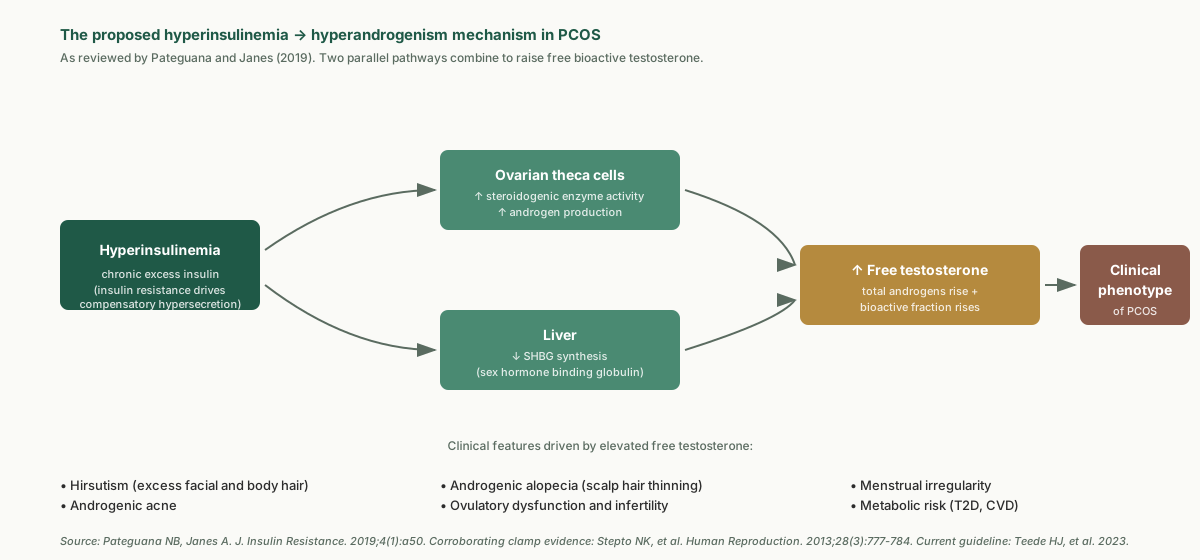
The review made a focused mechanistic argument. Excess insulin acts on ovarian theca cells to stimulate androgen production through direct effects on steroidogenic enzyme activity. In parallel, insulin suppresses hepatic synthesis of sex hormone binding globulin, which reduces SHBG levels and increases the fraction of testosterone circulating in bioactive free form. The two effects combine to produce the hyperandrogenism that drives much of the clinical phenotype of PCOS: hirsutism, acne, androgenic alopecia, and contributions to ovulatory dysfunction and infertility.
The treatment implication followed directly. If hyperinsulinemia is the upstream driver, then conventional treatments targeted at androgens themselves (oral contraceptives that increase SHBG, spironolactone and other anti-androgens that block testosterone effects) are addressing downstream symptoms rather than underlying cause. The authors argued that interventions correcting hyperinsulinemia (dietary change, exercise, metformin, weight loss) should be primary, with anti-androgen treatments reserved for symptoms that persist despite metabolic improvement.
The article has accumulated more than 47,000 views and has been cited in subsequent peer-reviewed work on PCOS hormone interactions (Emanuel et al., 2022), pathophysiological effects of contemporary lifestyle on PCOS (Parker, 2023), and nutritional guidelines for insulin resistance management (Muscogiuri et al., 2022).
What has been validated since publication
The clinical claim that insulin resistance and hyperinsulinemia are central features of PCOS pathophysiology has accumulated substantial supporting evidence and now sits at the center of international PCOS guidelines.
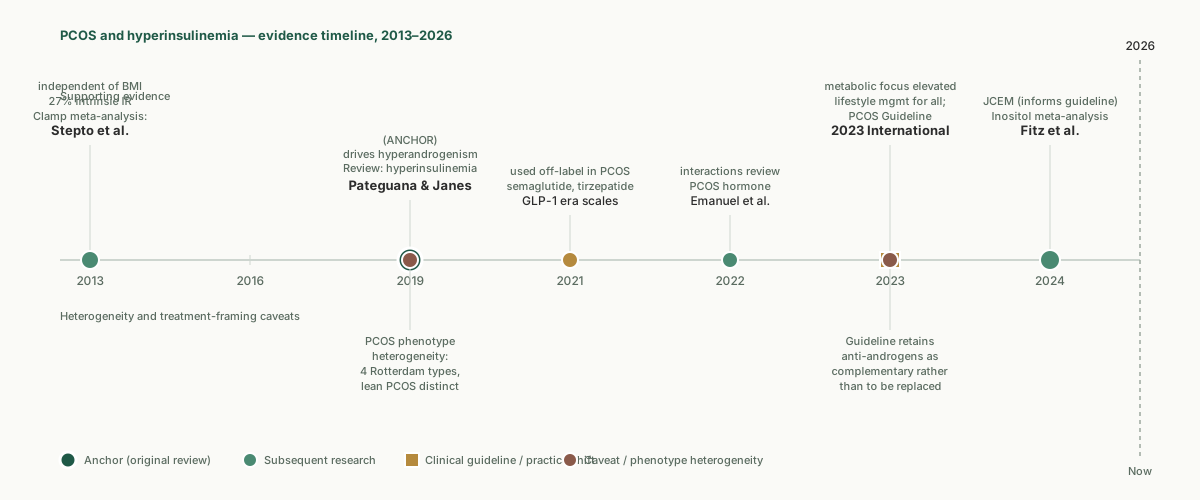
The strongest single piece of subsequent validation is the 2023 International Evidence-based PCOS Guideline (Teede et al., 2023), published in Human Reproduction, the Journal of Clinical Endocrinology & Metabolism, Fertility and Sterility, and European Journal of Endocrinology simultaneously. The guideline was co-developed by the American Society for Reproductive Medicine, the Endocrine Society, the European Society of Endocrinology, and the European Society of Human Reproduction and Embryology. The recommendations explicitly position lifestyle management (healthy eating and physical activity) as appropriate for all individuals with PCOS, with benefits documented even without weight loss. The guideline also strengthens recognition of broader PCOS features including metabolic risk factors, cardiovascular disease, sleep apnea, and high prevalence of psychological features. The 2018 prior version of the guideline already recommended lifestyle intervention; the 2023 update reinforced and broadened that position.
The mechanistic case for insulin resistance as a core feature of PCOS has been corroborated by direct physiological measurement. A meta-analysis of euglycemic-hyperinsulinemic clamp studies (the gold-standard methodology for measuring insulin sensitivity) found an inherent 27% reduction in insulin sensitivity in women with PCOS, with the deficit independent of body mass index (Stepto et al., 2013). This finding established that PCOS-associated insulin resistance is not simply a consequence of overweight or obesity but reflects an intrinsic metabolic difference. Subsequent work on skeletal muscle DNA methylation, insulin receptor signaling defects, and adipose tissue dysfunction in PCOS has added molecular detail to the clamp findings.
Inositol supplementation has emerged as a meaningful treatment option in the years since the Pateguana-Janes review. A systematic review and meta-analysis published in The Journal of Clinical Endocrinology & Metabolism (Fitz et al., 2024), commissioned to inform the 2023 international PCOS guideline, found evidence supporting myo-inositol or D-chiro-inositol for some metabolic measures in PCOS. Inositols appear to improve insulin sensitivity, with some evidence of benefit on ovulatory function and androgenic markers. In head-to-head comparisons with metformin, inositol shows roughly comparable metabolic effects with fewer gastrointestinal adverse events. The guideline acknowledges inositol as a reasonable option for patients who prefer a supplement-based approach or cannot tolerate metformin, while noting that the evidence base remains less mature than for metformin.
GLP-1 receptor agonists have changed the PCOS treatment landscape between 2019 and 2026 in ways that align with the Pateguana-Janes treatment philosophy. Semaglutide, tirzepatide, and related agents reduce insulin demand, improve insulin sensitivity, produce substantial weight loss, and have shown benefits on PCOS metabolic and reproductive markers in trials and clinical practice. The off-label use of GLP-1 RAs in PCOS has expanded rapidly. While not yet a first-line guideline-recommended treatment specifically for PCOS, GLP-1 RAs increasingly appear in PCOS treatment algorithms for patients with overlapping obesity, insulin resistance, or type 2 diabetes risk.
The recognition of PCOS as a metabolic condition rather than a purely reproductive one has expanded. The 2023 guideline elevated metabolic risk assessment and cardiovascular disease prevention as standard components of PCOS care. The recognition that PCOS is associated with significantly elevated rates of glucose intolerance (30-40%) and early-onset type 2 diabetes (approximately 10% by age 40) has driven changes in screening recommendations and longitudinal care planning. This is consistent with the broader framing Pateguana and Janes proposed.
What has been criticized or remains contested
The directional causation question, whether insulin resistance drives the hyperandrogenism or whether the hyperandrogenism contributes to insulin resistance, remains incompletely resolved. The 2013 clamp meta-analysis showing 27% reduced insulin sensitivity independent of BMI supports insulin resistance as an intrinsic feature of PCOS. Mechanistic work on theca cell androgen production and hepatic SHBG suppression supports insulin’s direct role in producing androgenic effects. Some research suggests androgens themselves can contribute to insulin resistance through effects on adipose tissue and muscle. The most defensible 2026 framing is that insulin resistance and hyperandrogenism participate in a self-reinforcing loop rather than one being a clean upstream cause of the other.
PCOS heterogeneity complicates the single-mechanism framing. The Rotterdam diagnostic criteria identify four PCOS phenotypes, distinguished by combinations of ovulatory dysfunction, hyperandrogenism, and polycystic ovarian morphology. Not all phenotypes show the same degree of insulin resistance. “Lean PCOS” (PCOS in women without significant overweight or obesity) represents perhaps 20-30% of cases and may involve different driving mechanisms, including increased ovarian androgen production with less prominent insulin resistance. The Pateguana-Janes framing, focused on the hyperinsulinemia-hyperandrogenism mechanism, fits some PCOS phenotypes better than others.
The treatment-philosophy framing, that conventional anti-androgen treatment misses the underlying cause, is more contested than the mechanistic claim itself. Modern PCOS care increasingly uses both metabolic and androgenic interventions in parallel rather than as alternatives. The 2023 guideline does not deprioritize anti-androgen treatments or oral contraceptives; it adds lifestyle intervention as a foundation for all PCOS patients. Patients with significant androgenic symptoms (hirsutism, severe acne) often benefit from anti-androgen treatment regardless of underlying metabolic status, and the two approaches are complementary in clinical practice.
The Pateguana affiliation with the Intensive Dietary Management Program represents an editorial framing that readers should weigh. The IDM clinical model emphasizes carbohydrate restriction and intermittent fasting as primary metabolic interventions. The Pateguana-Janes review presents this implicit treatment philosophy as following from the mechanistic argument. Other valid metabolic interventions (Mediterranean dietary patterns, structured calorie-restricted diets, GLP-1 receptor agonists, metformin, bariatric surgery for appropriate candidates) are not given equivalent attention in the review. The mechanism the review describes is valid; the implicit treatment hierarchy is a clinical framing choice.
The review’s brevity (three pages) and citation density limit its conclusions in ways the authors acknowledged. The “majority of research and evidence” framing in the conclusion is supported by the broader endocrine literature but is not deeply substantiated within the paper itself. The authors noted that further research was needed comparing lifestyle interventions for hyperinsulinemia against anti-androgen pharmacotherapy. That research has accumulated substantially in the six years since publication, but the specific head-to-head comparison the authors called for has not been conducted at the scale that would settle the treatment-philosophy question.
What this means for readers in 2026
The mechanistic claim has been substantially validated. The treatment landscape has expanded.
If you have PCOS and are working with your physician on management, the evidence in 2026 supports a metabolically informed approach as foundational. The 2023 International Evidence-based PCOS Guideline (Teede et al., 2023) explicitly recommends lifestyle management (healthy eating and physical activity) for all individuals with PCOS, with metabolic benefits documented even without weight loss. This is a meaningful institutional shift from older treatment paradigms that focused primarily on managing symptoms. The specific dietary approach matters less than sustained adherence; Mediterranean, low-carbohydrate, time-restricted eating, and calorie-restricted approaches all show benefit on PCOS metabolic markers. The choice that works for you is the one you can maintain.
If you have been offered metformin or are considering inositol, both are reasonable options with evidence supporting use in PCOS. Metformin has a longer evidence base; inositol has accumulated meaningful supporting evidence between 2019 and 2025 and is acknowledged in the 2023 guideline as a reasonable option, particularly for patients who prefer a supplement-based approach or cannot tolerate metformin’s gastrointestinal effects. Both interventions target the insulin-resistance component the Pateguana-Janes review emphasized.
If you are considering GLP-1 receptor agonists like semaglutide or tirzepatide for PCOS-related concerns (weight, insulin resistance, type 2 diabetes risk), discuss this with your prescribing physician. GLP-1 RAs are not yet a first-line PCOS-specific treatment in major guidelines but are increasingly used off-label for PCOS patients with overlapping metabolic risk. The treatment-philosophy logic (reducing insulin demand and improving sensitivity rather than targeting androgens directly) aligns with what the Pateguana-Janes review argued for.
If you have lean PCOS (PCOS without significant overweight or obesity), your situation may differ from the framing that emphasizes weight loss as the primary metabolic intervention. Approximately 20-30% of PCOS cases occur in women with normal weight. Insulin sensitivity may still be reduced relative to non-PCOS controls, but the appropriate intervention pattern may emphasize quality of diet, physical activity, and pharmacological metabolic support over weight loss. Discuss your specific phenotype with your physician rather than assuming the high-BMI PCOS treatment template applies.
If you continue to use oral contraceptives, spironolactone, or other anti-androgen treatments, the 2023 guideline does not deprioritize these. They remain appropriate for managing specific symptoms, particularly hirsutism, severe acne, and androgenic hair loss. The modern integrated approach uses metabolic and androgenic interventions in parallel rather than positioning them as alternatives. The Pateguana-Janes framing argued for metabolic intervention as the primary lever; in 2026 clinical practice, most patients benefit from a combination tailored to their specific phenotype and goals.
If you are concerned about long-term complications, PCOS is recognized in current guidelines as a condition that elevates long-term risk for type 2 diabetes, cardiovascular disease, sleep apnea, and several other conditions. Regular metabolic screening, cardiovascular risk assessment, and proactive management of co-occurring conditions are part of standard PCOS care now in a way they were not consistently a decade ago.
The 2019 review captured a specific moment in PCOS thinking, a focused argument that the prevailing treatment paradigm had inverted cause and effect. The 2023 international guideline does not adopt the full inversion the Pateguana-Janes review argued for, but it does meaningfully elevate metabolic management to the foundation of PCOS care. The broader picture in 2026 is that PCOS is recognized as a heterogeneous metabolic-reproductive condition, with multiple valid treatment paths and increasing emphasis on individualizing the approach to the specific patient’s phenotype, goals, and life stage.
References
Emanuel, R. H. K., Roberts, J., Docherty, P. D., Lunt, H., Campbell, R. E., & Möller, K. (2022). A review of the hormones involved in the endocrine dysfunctions of polycystic ovary syndrome and their interactions. Frontiers in Endocrinology, 13, 1017468.
ElSayed, N. A., Aleppo, G., Bannuru, R. R., et al. (2025). Standards of Care in Diabetes—2025. Diabetes Care, 48(Suppl 1).
Fitz, V., Graca, S., Mahalingaiah, S., et al. (2024). Inositol for Polycystic Ovary Syndrome: A Systematic Review and Meta-analysis to Inform the 2023 Update of the International Evidence-based PCOS Guidelines. The Journal of Clinical Endocrinology & Metabolism, 109(6), 1630–1655.
Muscogiuri, G., Barrea, L., Caprio, M., et al. (2022). Nutritional guidelines for the management of insulin resistance. Critical Reviews in Food Science and Nutrition, 62(25), 6947–6960.
Parker, J. (2023). Pathophysiological Effects of Contemporary Lifestyle on Evolutionary-Conserved Survival Mechanisms in Polycystic Ovary Syndrome. Life, 13(4), 1056.
Pateguana, N. B., & Janes, A. (2019). The contribution of hyperinsulinemia to the hyperandrogenism of polycystic ovary syndrome. Journal of Insulin Resistance, 4(1), a50. https://doi.org/10.4102/jir.v4i1.50
Stepto, N. K., Cassar, S., Joham, A. E., et al. (2013). Women with polycystic ovary syndrome have intrinsic insulin resistance on euglycaemic–hyperinsulinaemic clamp. Human Reproduction, 28(3), 777–784.
Teede, H. J., Tay, C. T., Laven, J. J. E., et al. (2023). Recommendations From the 2023 International Evidence-based Guideline for the Assessment and Management of Polycystic Ovary Syndrome. Human Reproduction, 38(9), 1655–1679.