About the original paper
James J. DiNicolantonio, Jaikrit Bhutani, and James H. O’Keefe (2016) published Added sugars drive chronic kidney disease and its consequences: A comprehensive review in the Journal of Insulin Resistance. The paper is available in full at the publisher’s site under a Creative Commons Attribution 4.0 license. DiNicolantonio and O’Keefe were at the Department of Preventive Cardiology at Saint Luke’s Mid America Heart Institute in Kansas City. Bhutani contributed from a clinical training position.
The review built a multi-pathway argument connecting added sugar consumption to CKD pathogenesis. The authors organized the evidence around several mechanistic pathways. First, fructose metabolism through fructokinase produces a rapid phosphorylation that depletes intracellular ATP and generates AMP, which enters the purine degradation pathway and produces uric acid. Second, fructose-induced insulin resistance impairs renal uric acid excretion. The combination of increased uric acid production and reduced excretion produces the hyperuricemia that the review identifies as a central CKD risk factor. Third, hepatic de novo lipogenesis from fructose substrate produces non-alcoholic fatty liver disease, which the authors connect to a NAFLD-CKD axis through systemic inflammation and dysmetabolic signaling. Fourth, direct tubular effects of high fructose load, mediated through fructose-specific transporters and metabolic effects in the kidney itself, contribute to renal injury. Fifth, hyperuricemia-mediated afferent arteriolopathy alters renal hemodynamics in ways that promote glomerular injury over time.
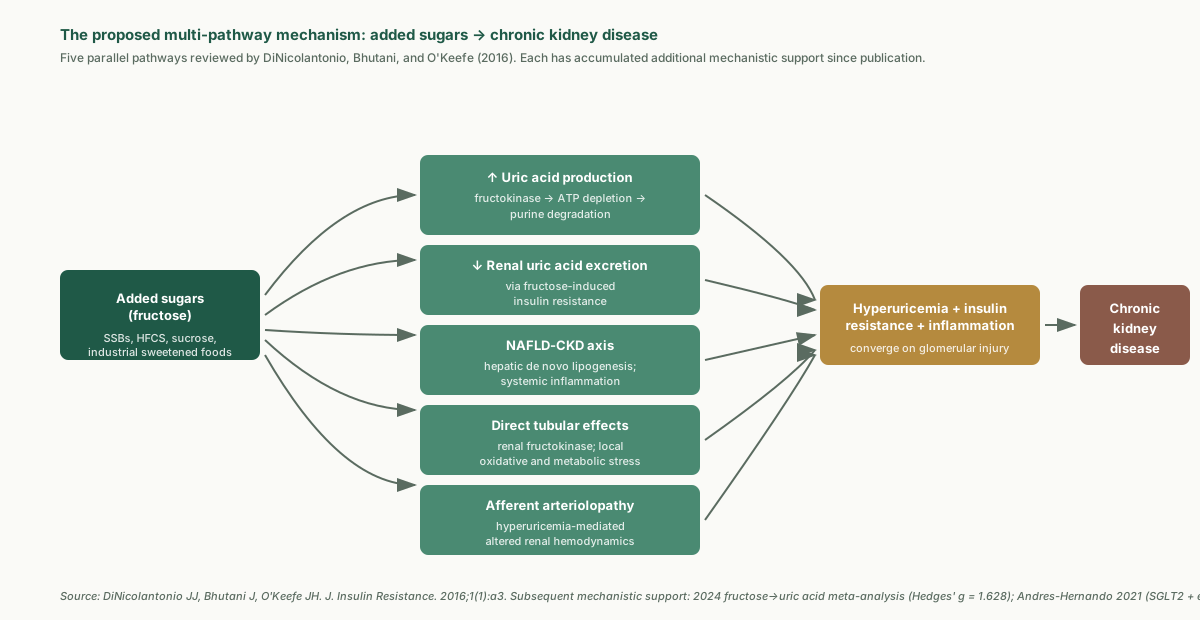
The review’s clinical translation was direct. The authors argued that added sugar reduction should be a primary lever in CKD prevention and management, alongside conventional interventions targeting blood pressure, glycemic control, and proteinuria. They positioned dietary fructose reduction as addressing an upstream driver of the metabolic and hemodynamic disturbances that produce CKD in the typical American clinical population.
The author group’s broader public profile is the same context as for several of the other JIR papers in this catalog. DiNicolantonio has authored multiple books advocating contrarian nutrition positions, including subsequent work on sodium and statins. The 2016 paper on added sugars and CKD sits in a more mainstream-aligned position than some of the same author group’s subsequent work, because the added-sugars-and-metabolic-disease argument has substantially more institutional support than, for example, the sodium-restriction-is-harmful position the same authors advanced in 2023.
The paper did not declare external funding. It has accumulated meaningful citation in subsequent peer-reviewed work on fructose metabolism, NAFLD-CKD axis research, and SGLT2 inhibitor mechanistic studies.
What has been validated since publication
The mechanistic case the original review made has been substantially confirmed and extended by subsequent research between 2016 and 2026.
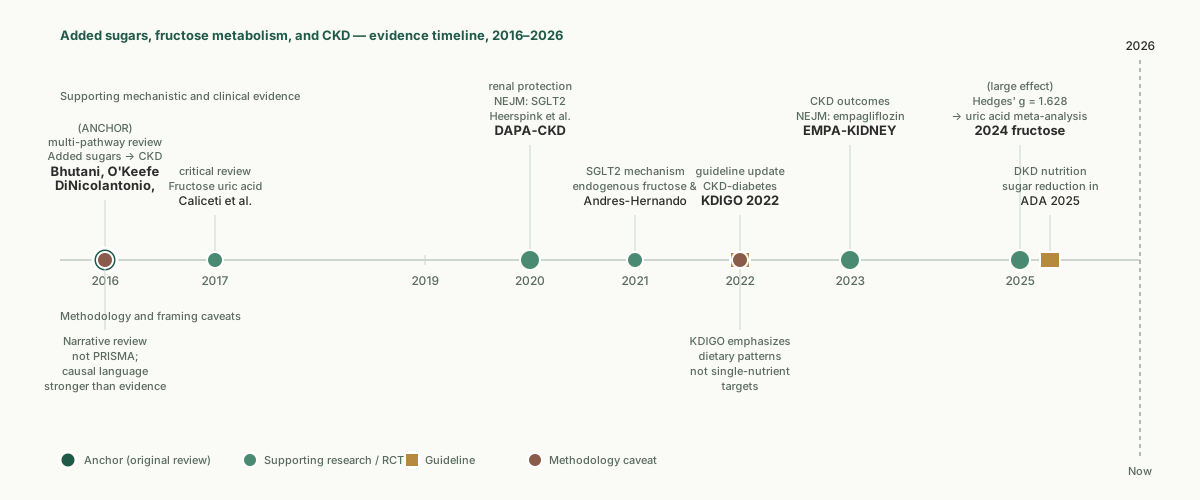
The fructose-uric acid mechanism has been quantified more precisely. A 2024 systematic review and meta-analysis examining the effect of fructose intake on serum uric acid levels reported a large effect size (Hedges’ g = 1.628, P less than 0.001) for the relationship between fructose intake and uric acid elevation. Pooled analysis combining fructose, fructose-glucose mixtures, and honey showed a smaller but still significant effect (Hedges’ g = 0.550, P = 0.028). The biochemistry (fructose phosphorylation by fructokinase, ATP depletion, AMP deamination, purine degradation, and urate production) has been documented in detail in the mechanistic literature.
The hyperuricemia-CKD connection has gained independent support. Multiple observational cohort studies and Mendelian randomization analyses have shown that elevated serum uric acid is associated with CKD incidence and progression, with effect sizes that remain after adjustment for traditional CKD risk factors. The mechanism (afferent arteriolopathy, tubular injury, and pro-inflammatory and pro-oxidative effects of uric acid in renal tissue) has been described in cellular and animal models and corroborated by human pathology.
The connection between SGLT2 inhibitor renal protection and fructose metabolism has emerged as a major translational research finding. SGLT2 inhibitors (empagliflozin, dapagliflozin, canagliflozin) have demonstrated substantial renal protective effects in major clinical trials, including the EMPA-KIDNEY, DAPA-CKD, and CREDENCE trials. The mechanism by which SGLT2 inhibitors produce these effects is multifactorial and incompletely understood, but emerging research has identified endogenous fructose metabolism in the kidney as one of the contributing pathways. The connection has been described in mechanistic review papers published in Frontiers in Pharmacology and similar venues. This is not a direct vindication of the original review’s clinical translation, but it is a striking finding: the most successful new pharmacological CKD intervention of the past decade operates partly through a pathway that the 2016 review identified as a target for dietary intervention.
The NAFLD-CKD axis has accumulated substantial subsequent evidence. Bidirectional associations between fatty liver disease and CKD have been documented in multiple cohort studies, and shared mechanistic pathways (insulin resistance, systemic inflammation, dysregulated lipid metabolism, altered gut microbiome) have been characterized. Several review articles in nephrology and hepatology journals have explicitly addressed the NAFLD-CKD axis as a unified clinical syndrome requiring coordinated management.
The mainstream nephrology position has moved meaningfully toward recognizing added sugar reduction as a component of dietary management. KDIGO clinical practice guidelines do not single out added sugars as a primary intervention target, but they do emphasize healthy dietary patterns that incorporate sugar moderation. The 2025 ADA Standards of Care (ElSayed et al., 2025) include sugar reduction recommendations within the broader nutrition guidance for diabetic kidney disease management. The American Heart Association’s added sugar recommendations (less than 9 teaspoons per day for men, less than 6 teaspoons per day for women) align with the broader public-health framing the review advocated.
The SSB-CKD specific evidence has grown substantially. Multiple prospective cohort studies have examined the association between sugar-sweetened beverage intake and CKD incidence, generally finding meaningful associations even after adjustment for energy intake, BMI, blood pressure, and other potential confounders. The effect sizes are modest but consistent across populations.
What has been criticized or remains contested
The directional causation question, whether added sugars cause CKD or merely associate with CKD through shared confounders, remains incompletely resolved. Most of the evidence base is observational. Randomized controlled trials specifically testing added sugar reduction for CKD prevention or progression have not been conducted at scale because the trial design is expensive, long-duration, and difficult to control for adherence. The mechanistic case is strong; the direct clinical-outcome RCT evidence is thinner than would be ideal.
The “added sugars CAUSE CKD” framing in the review’s title is stronger than what most contemporary nephrology and nutrition reviewers would write. The 2016 framing leaned into causal language that the available evidence base supported only in observational and mechanistic terms. Modern systematic reviews tend toward more cautious language about associations and contributing factors, with explicit acknowledgment of the limitations of observational evidence in establishing causality. The substantive claims about mechanism are well-supported; the strength of the causal framing in the original is somewhat stronger than what current evidence-grading standards would support.
The dietary pattern question complicates the single-nutrient framing. Mediterranean diets, DASH diets, and other healthy dietary patterns all reduce CKD risk in observational studies. These patterns differ from typical American diets in many ways beyond added sugar content: they include more fruits, vegetables, fiber, omega-3 fatty acids, and unsaturated fats, and less ultra-processed food, sodium, and saturated fat. Isolating “added sugar reduction” as the active component is difficult because added sugar reduction is part of a broader dietary pattern change in most observational studies. The mainstream nutrition position has moved toward dietary-pattern guidance rather than single-nutrient guidance for this reason.
The fructose source question matters more than the original review fully addressed. Fructose from whole fruit, accompanied by fiber and consumed alongside the broader nutrient matrix of intact food, produces meaningfully different metabolic responses than fructose from high-fructose corn syrup or sucrose in sweetened beverages. The mechanistic concerns the review raises apply most clearly to liquid added-sugar sources (sodas, sweetened beverages, fruit juices) and to industrial added-sugar exposure. Whole fruit consumption is generally associated with neutral or beneficial CKD-relevant outcomes in cohort studies. The clinical translation should distinguish between source categories more carefully than the original review framing did.
The “comprehensive review” methodology is the same structural concern that applies to several DiNicolantonio review papers. The 2016 paper is a narrative review that organizes evidence in support of a specific framing. It is not a formal systematic review using PRISMA methodology, pre-registered protocols, or comprehensive search strategies. The narrative review structure allows the authors to organize a coherent argument from selected evidence, which is appropriate for an introduction to a research area but limits the conclusions that can be drawn about strength of evidence and confidence in the framing.
DiNicolantonio’s broader public profile is the same context as for the 2023 sodium paper. Readers encountering the 2016 added sugars review should be aware that the same author has advanced more contrarian framings on sodium and statins in subsequent work. The 2016 paper itself is more aligned with mainstream nutrition guidance than some of the same author’s later work; the added-sugars-cause-metabolic-disease argument is now part of mainstream public-health framing, while the sodium-restriction-is-harmful argument is not. The author profile pattern is part of the context for reading the work, even when the specific paper happens to land in a more mainstream-aligned position.
What this means for readers in 2026
The clinical and public-health implications of the review have aged well.
If you have chronic kidney disease or are at risk for CKD (with diabetes, hypertension, family history, obesity, or known proteinuria), the evidence supports limiting added sugar intake as part of broader dietary management. Sugar-sweetened beverages in particular show consistent associations with adverse CKD outcomes across observational studies. The 2025 ADA Standards of Care (ElSayed et al., 2025) and current nephrology guidance both support added sugar reduction within broader dietary pattern recommendations. The American Heart Association’s specific added sugar limits (less than 9 teaspoons per day for men, less than 6 teaspoons per day for women) are reasonable practical targets.
If you have hyperuricemia or gout (related conditions that share mechanistic pathways with CKD), reducing added sugar and sugar-sweetened beverage intake is supported by the available evidence as one component of management. The fructose-uric acid mechanism is well-established, and 2024 meta-analysis data confirms substantial effect sizes for fructose intake on uric acid levels. Combined with adequate hydration, weight management where appropriate, and any prescribed urate-lowering therapy, dietary added sugar reduction is a reasonable lifestyle component.
If you take SGLT2 inhibitors for diabetes, heart failure, or CKD, the renal protective effects of these medications operate through multiple pathways that include effects on endogenous fructose metabolism. This is an emerging mechanistic finding that connects the 2016 review’s argument to the most successful recent class of CKD medications. The takeaway is not that medications replace dietary intervention but that the broader pathway the review identified is now actively targeted by pharmacological treatment in current nephrology practice.
If you are evaluating dietary advice for kidney health more broadly, the mainstream framing in 2026 emphasizes overall dietary patterns rather than single-nutrient targets. Mediterranean, DASH, and plant-forward dietary patterns are associated with reduced CKD risk in observational studies. Added sugar reduction is part of these broader patterns. The single-nutrient framing the original review used was useful for organizing a mechanistic argument but oversimplifies the practical dietary guidance.
If you are distinguishing between sources of dietary fructose, the evidence supports treating sugar-sweetened beverages and added sugars in processed foods as the primary concern, with whole fruit consumption generally considered neutral or beneficial. The fructose-CKD framing applies most clearly to industrial added sugars and sweetened beverages, less clearly to whole fruit consumption within a balanced dietary pattern.
If you are reading DiNicolantonio’s broader work through books, podcasts, or other media, the 2016 paper on added sugars and CKD sits in a more mainstream-aligned position than some of the same author’s subsequent contrarian work on sodium and statins. The specific peer-reviewed claim in this paper is consistent with where mainstream nephrology and nutrition have moved over the past decade. Reading specific peer-reviewed work on its own merits, while recognizing the broader framing pattern across the author’s catalog, remains the appropriate approach.
The 2016 review made a multi-pathway mechanistic argument linking added sugars to chronic kidney disease. The mechanistic case has been substantially confirmed and in some ways exceeded by subsequent research, including the SGLT2 inhibitor connection that was not visible in 2016. The clinical translation, that added sugar reduction should be part of CKD prevention and management, has become more mainstream than contrarian in the years since publication. The “comprehensive review” framing was stronger on causal language than current evidence-grading standards would support, but the underlying argument has aged well as part of the broader shift toward recognizing added sugar reduction as a legitimate public-health priority.
References
Andres-Hernando, A., Cicerchi, C., Kuwabara, M., et al. (2021). Endogenous Fructose Metabolism Could Explain the Warburg Effect and the Protection of SGLT2 Inhibitors in Chronic Kidney Disease. Frontiers in Pharmacology, 12, 694457.
Caliceti, C., Calabria, D., Roda, A., & Cicero, A. F. G. (2017). Fructose Intake, Serum Uric Acid, and Cardiometabolic Disorders: A Critical Review. Nutrients, 9(4), 395.
Choi, J. W. J., Ford, E. S., Gao, X., & Choi, H. K. (2008). Sugar-sweetened soft drinks, diet soft drinks, and serum uric acid level: The Third National Health and Nutrition Examination Survey. Arthritis & Rheumatism, 59(1), 109–116.
DiNicolantonio, J. J., Bhutani, J., & O’Keefe, J. H. (2016). Added sugars drive chronic kidney disease and its consequences: A comprehensive review. Journal of Insulin Resistance, 1(1), a3. https://doi.org/10.4102/jir.v1i1.3
ElSayed, N. A., Aleppo, G., Bannuru, R. R., et al. (2025). Standards of Care in Diabetes—2025. Diabetes Care, 48(Suppl 1).
The EMPA-KIDNEY Collaborative Group. (2023). Empagliflozin in Patients with Chronic Kidney Disease. The New England Journal of Medicine, 388(2), 117–127.
Heerspink, H. J. L., Stefánsson, B. V., Correa-Rotter, R., et al. (2020). Dapagliflozin in Patients with Chronic Kidney Disease (DAPA-CKD). The New England Journal of Medicine, 383(15), 1436–1446.
Kanbay, M., Aslan, G., Afsar, B., et al. (2020). Fructose and Uric Acid: Major Mediators of Cardiovascular Disease Risk Starting at Pediatric Age. International Journal of Molecular Sciences, 21(12), 4470.
Kidney Disease: Improving Global Outcomes (KDIGO) Diabetes Work Group. (2022). KDIGO 2022 Clinical Practice Guideline for Diabetes Management in Chronic Kidney Disease. Kidney International, 102(5S), S1–S127.
Lin, J., Hu, F. B., & Curhan, G. C. (2010). Associations of diet with albuminuria and kidney function decline. Clinical Journal of the American Society of Nephrology, 5(5), 836–843.